
Facial Harmonization & Injectable Contouring
Personalized, conservative injectable contouring for natural-looking facial balance, at Rêve Dermatology & Aesthetics in The Woodlands, TX.
Facial harmonization is an injectable approach that uses dermal fillers and biostimulators to restore proportion across multiple areas of the face, including the chin, jawline, cheeks, and lips, instead of treating one wrinkle at a time. It addresses the structural changes (bone, fat, and skin) that drive a tired or softened look.
If you have noticed your face look softer, less defined, or somehow tired even when you feel rested, and you would prefer not to consider surgery, facial harmonization may be a good fit. Treatment is led by Dr. Oben Blair Ojong, DO, FAAD, a board-certified dermatologist and board-certified Mohs surgeon.
Schedule a consultation to map a personalized plan. Call (346) 351-6622 or request a consultation. Same-week appointments often available.
On This Page:
Structural Aging | Harmonization vs. Balancing | The Science | Areas Treated | How It Works | Treatment Pathway | Candidates | vs. Facelift | What to Expect | Duration | Cost | Why Choose | FAQ | Schedule
Addressing Structural Aging With Facial Harmonization
As we age, changes to the skin go deeper than surface-level wrinkles. The gradual loss of bone density and facial fat can soften the jawline, flatten the chin, and reduce lip definition. Facial harmonization takes a holistic approach to address these concerns and others, considering balance, proportion, and structural integrity.
Injectable contouring provides a non-surgical method to refine your features without altering your natural appearance. By restoring support from within, treatment can strengthen a recessed chin, redefine a soft jawline, and add youthful volume to thinning lips.
Same-week appointments often available.
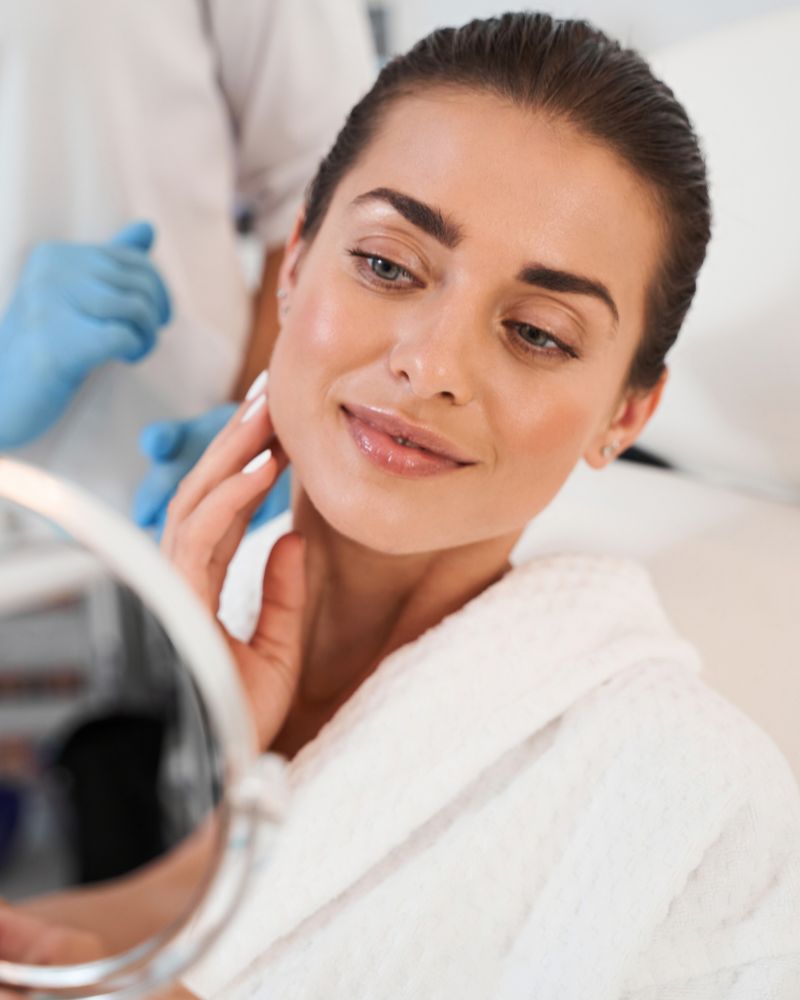
Facial Harmonization vs. Facial Balancing: Same Treatment, Two Names
Patients often ask whether “facial harmonization” and “facial balancing” describe different procedures. They do not. Facial harmonization, facial balancing, and non-surgical facial contouring all describe the same approach: restoring proportion across several connected zones with injectables rather than treating one wrinkle in isolation.
Whichever phrase you use, Dr. Ojong evaluates the face as a whole and selects products and areas most likely to produce a natural, proportionate result. Treatment may combine dermal fillers, biostimulators, and neuromodulators based on the areas and goals identified during your consultation.
The Science of Facial Proportion and Symmetry
A balanced face is shaped by three layers that change together: bone, fat, and skin. When one shifts, the others follow, which is why isolated treatments often deliver only partial results.
- Bone. Imaging evidence shows region-specific facial bone resorption with age, especially at the orbital rims, midface, and jaw (Lee et al., 2026).
- Fat. Distinct facial fat compartments deflate and redistribute with age, contributing to flattened cheeks, deeper folds, and a softened jawline (Schultz et al., 2020).
- Skin. International expert consensus describes the contemporary objective of injectable treatment as facial harmonization: addressing aesthetic units and the underlying causes of aging together rather than chasing individual wrinkles (Sundaram et al., 2016).
Areas Treated With Facial Harmonization
Facial harmonization is built around the connected zones of the face, not single lines. The areas Dr. Ojong commonly addresses as part of a coordinated plan:
- Chin. A weak or recessed chin can throw off lower-face balance. In a multicenter randomized trial, hyaluronic acid filler produced clinically meaningful improvement in chin projection at six months, with adverse events generally mild and short-lived (Beer et al., 2021).
- Jawline. Soft mandibular angles, pre-jowl hollows, and asymmetry can make the lower face look heavier. Strategic placement along the jawline and prejowl sulcus may help restore a sharper contour. Neuromodulator treatments can complement filler for masseter slimming.
- Lips. Lip enhancement focuses on shape, balance, and hydration, not just size. A comparative study found that injection technique meaningfully affects filler migration and patient satisfaction, suggesting technique matters more than product volume (Buhsem, 2024).
- Cheeks and mid-face. Flattened cheeks reflect both fat-pad deflation and bony recession. A systematic review found that hyaluronic acid fillers for midface augmentation are generally well tolerated, with most adverse events mild and transient (Trinh & Gupta, 2021).
- Tear trough and under-eye. Hollowness under the eyes can create a tired look that rest does not resolve. Pooled data suggest hyaluronic acid filler can improve this region in many patients, though the under-eye is a higher-risk zone that demands careful technique (Liu et al., 2023).
- Temples. Temporal hollowing changes how light falls across the upper face. Evidence is more limited here than for cheek and chin, so treatment is approached cautiously and only when it fits the broader plan.
- Nasolabial folds and smile lines. Folds from nose to mouth are often best addressed by first treating the cheek and midface, since restoring volume above reduces the depth of folds below.
How Facial Harmonization Works at Rêve Dermatology
Successful facial contouring requires a combination of artistry and deep medical expertise. Guided by comprehensive knowledge of facial anatomy, tissue planes, and vascular structures, we apply an expert eye for proportion to achieve aesthetic balance. Every treatment begins with a detailed consultation to design a cohesive plan that enhances your natural features.
Product selection is part of the plan. “Filler” is not one thing. The category includes several distinct families:
- Hyaluronic acid (HA) fillers offer immediate, reversible volume. Evidence suggests that selection guided by rheologic properties allows clinicians to match product to anatomic zone and goal (Hong et al., 2025).
- Calcium hydroxylapatite (CaHA) biostimulators provide both immediate lift and gradual collagen stimulation.
- Poly-L-lactic acid (PLLA) biostimulators stimulate collagen over months for broader, gradual restoration.
- Neuromodulators relax specific muscles that pull facial features out of balance. In a harmonization plan, they may complement fillers by softening masseter bulk for jawline slimming, lifting the brow, or reducing dynamic lines that compete with restored volume.
Physician-led selection means choosing the right tool for your anatomy rather than defaulting to a single product for every face.
The Facial Harmonization Treatment Pathway
Most patients are not treated all at once. A staged approach lets results build naturally and lets your provider refine the plan based on how your tissue responds.
Step 1: Personalized Consultation
Dr. Ojong evaluates your facial anatomy, reviews your goals and medical history, and documents baseline photographs. This step distinguishes what you want to address from what your face actually needs.
Step 2: Treatment Plan Design
Dr. Ojong maps the areas to treat, the order to treat them, and the products best matched to each zone. International consensus describes facial harmonization as a coordinated, multi-area plan rather than a single appointment (Sundaram et al., 2016).
Step 3: Initial Treatment Session
A typical session lasts 30 to 60 minutes. Topical numbing is applied, and most filler products contain a built-in anesthetic. Dr. Ojong uses a fine needle or blunt-tipped cannula based on the area and your anatomy.
Step 4: Refinement and Layering
Two to four weeks later, you return for a results review. Small adjustments can be added at this visit. Staging treatment, rather than overfilling in one session, is the central principle behind natural-looking facial balance.
Step 5: Maintenance
Different products and areas hold their results on different timelines. Dr. Ojong will recommend a personalized maintenance interval based on the areas treated and how your tissue has responded.
Who Is a Good Candidate for Facial Harmonization?
Facial harmonization is most often a good fit for adults who want subtle, multi-area improvement without surgery. Your dermatologist will discuss whether it is appropriate based on your medical history, anatomy, and goals.
You may be a candidate if you:
- Notice loss of definition along the jawline, chin, or cheeks
- Feel that your face looks tired even when you are rested
- Want to address several connected concerns rather than a single wrinkle
- Prefer a non-surgical approach with minimal downtime
- Are in good general health and not pregnant or breastfeeding
Facial harmonization may not be appropriate if you have:
- Active skin infection or inflammation in the treatment area
- A known allergy to filler ingredients
- Certain bleeding or autoimmune conditions
- Recent dental work in the planned treatment zone
Many patients pair filler-based contouring with collagen stimulation treatments to support tissue quality alongside volume.
Facial Harmonization vs. a Surgical Facelift
Patients often ask whether facial harmonization is “the same as a facelift.” It is not, and understanding the difference helps set realistic expectations.
| Approach | Facial Harmonization | Surgical Facelift |
|---|---|---|
| Method | Non-surgical injectables | Surgical excision and lifting |
| Anesthesia | Topical numbing | General or deep sedation |
| Recovery | Hours to a few days | Several weeks |
| Result Duration | Months to about two years | Several years |
Facial harmonization is a strong fit for patients who want to address proportion, volume loss, and contour without surgery. For patients whose primary concern is significant skin laxity, surgical evaluation may be a better match.
What to Expect: Treatment, Recovery, and Aftercare
Before your appointment. To reduce the risk of bruising, you may be asked to avoid blood-thinning medications and supplements (aspirin, ibuprofen, vitamin E, fish oil) for several days. Avoid alcohol for 24 hours before treatment.
During treatment. Multi-area sessions typically take 30 to 60 minutes. Topical numbing is applied, and many fillers contain a built-in anesthetic. Evidence indicates that injection technique meaningfully affects both safety and outcomes in lip augmentation (Buhsem, 2024).
After treatment. Most patients return to normal activities the same day. Mild bruising, swelling, or tenderness usually resolves within two to seven days. Avoid strenuous exercise, heat, and saunas for the first 24 hours, and sleep with your head slightly elevated on the first night.
Serious complications are uncommon with experienced injectors. International expert consensus emphasizes that inadvertent intravascular injection of filler is a rare but serious risk requiring immediate, protocol-driven response, which is one reason injector experience matters (Kroumpouzos & Treacy, 2024).
How Long Do Facial Harmonization Results Last?
Results vary by product, area, and individual factors. Many hyaluronic acid fillers are reported to last several months to over a year, while biostimulators build collagen gradually and can extend the visible benefit longer than HA alone. Most patients return for a refresher between six and 18 months; lip and tear trough filler often need attention sooner than chin or jawline filler.
How Much Does Facial Harmonization Cost in The Woodlands?
Cost varies because facial harmonization is a personalized plan, not a single product. Pricing depends on the number of areas treated, the products selected, and whether the plan is staged across multiple sessions. Rêve Dermatology provides a personalized estimate at your consultation; payment plan information is available on request.
Why Choose a Board-Certified Dermatologist for Facial Harmonization
Dr. Oben Blair Ojong, DO, FAAD, is a board-certified dermatologist and board-certified Mohs surgeon at Rêve Dermatology & Aesthetics in The Woodlands, TX. Mohs surgery requires removing skin cancer layer by layer while preserving healthy tissue, training that builds a precise understanding of the structures beneath the skin: nerves, blood vessels, fat pads, and muscle planes. This surgical foundation informs every injection plan and is at the core of physician-led care (Hong et al., 2025).
Dr. Ojong is a Fellow of the American Academy of Dermatology (AAD) and a member of the American Society for Dermatologic Surgery (ASDS) and Skin of Color Society. Explore the full range of cosmetic services, or view results from prior patients.
Precision, Balance, and Natural Beauty
Ready to map a personalized facial harmonization plan? Schedule a consultation with Dr. Ojong to review your goals and explore the right combination of products and areas for your anatomy.
Frequently Asked Questions
What is facial harmonization?
Advanced aesthetic treatments typically address a specific wrinkle or fold, such as smile lines. In contrast, facial harmonization takes a wider approach that considers the face as a whole. Our professional aesthetic approach enhances facial proportion and creates a more harmonious overall appearance. Treating multiple areas, such as the chin and jawline, in conjunction creates a cohesive, natural result that spot treatment cannot achieve.
What is the difference between facial harmonization and facial balancing?
Facial harmonization and facial balancing describe the same approach: a multi-area injectable plan that restores proportion across connected zones of the face. The terms are used interchangeably in cosmetic dermatology, and patients searching either phrase land at the same treatment plan at Rêve.
How much does facial harmonization cost in The Woodlands?
Cost depends on the number of areas treated, the products selected, and whether the plan is staged. Rêve Dermatology provides a personalized estimate at your consultation, and payment plan information is available on request.
How long do facial harmonization results last?
Results vary by product, area, and individual factors. Many hyaluronic acid fillers are reported to last several months to over a year, while biostimulators build collagen gradually. Most patients return for refresher visits between six and 18 months.
What is the recovery time after facial harmonization?
Most patients return to normal activities the same day. Mild bruising, swelling, or tenderness typically resolves within two to seven days. Avoid strenuous exercise, heat, and saunas for the first 24 hours, and sleep with your head slightly elevated on the first night.
What are the side effects of facial harmonization?
As with any medical procedure, there are potential risks. Bruising and swelling are common but temporary, asymmetry is possible but uncommon, and vascular complications are exceedingly rare. International expert consensus underscores that physician-led management is the standard for handling these rare events safely (Kroumpouzos & Treacy, 2024). Administered by experienced professionals, these treatments are designed to provide subtle, refined enhancements.
What types of fillers are used in facial harmonization?
Treatment plans typically draw from three categories: hyaluronic acid fillers for immediate, reversible volume; calcium hydroxylapatite biostimulators for combined lift and collagen stimulation; and poly-L-lactic acid biostimulators for gradual collagen building. Neuromodulators may also be included to address muscle-driven concerns such as masseter bulk or dynamic lines. Selection is guided by anatomy and goals, not brand preference.
What should I expect from a lip enhancement treatment?
Beyond restoring volume, lip enhancement focuses on shape, balance, and hydration to create natural-looking, proportionate results. The treatment is a minimally invasive procedure that takes about 15 to 30 minutes, using topical numbing and a fine needle or blunt-tipped cannula. Most patients describe the sensation as a “quick pinch” similar to a mosquito bite. Temporary swelling, tenderness, or bruising can occur and usually resolve within several days to a week. Evidence indicates that technique, not simply product volume, drives lip augmentation outcomes (Buhsem, 2024).
How do you ensure results look natural and are not overfilled?
This is a common concern among patients who fear an “overfilled” look. Natural-looking results rely on conservative techniques, strategic placement, and an aesthetic understanding of facial proportions. We often recommend building results gradually over time using the minimal amount of product necessary in a staged treatment approach. This helps ensure a subtle, integrated outcome rather than visible evidence of treatment.
Is facial harmonization a good option for men?
Yes. Facial harmonization is increasingly common for male patients who want to refine the jawline, chin, and cheeks while preserving masculine features. Product placement differs from female-pattern contouring to maintain a strong, balanced profile.
Schedule Your Facial Harmonization Consultation in The Woodlands
Rêve Dermatology is located off I-45 on Pinecroft Drive, minutes from Market Street and The Woodlands Town Center. To map a personalized plan with Dr. Ojong, call (346) 351-6622 or request a consultation online. Same-week appointments are often available.
This article is for educational purposes only and does not replace professional medical advice, diagnosis, or treatment. Facial harmonization is used at Rêve Dermatology & Aesthetics as part of comprehensive dermatologic care. Results vary based on individual factors including anatomy, skin quality, and treatment history. The research cited reflects specific study populations and controlled settings; your results may differ. Always consult with a qualified dermatologist before starting any new treatment.
Medically reviewed by Oben Blair Ojong, DO, FAAD, Board-Certified Dermatologist and Board-Certified Mohs Surgeon
Last reviewed: May 2026
Get in touch!
Contact Us
Location
9323 Pinecroft Dr, Ste 202
The Woodlands, TX 77380
© Copyright 2026 Rêve Dermatology and Aesthetics
| Accessibility | Privacy |