

By Dr. Oben Blair Ojong, DO, FAAD
Board-Certified Dermatologist & Board-Certified Mohs Surgeon
Quick Insights:
Spider veins are the small, visible blood vessels that often appear on the legs and face and can affect both confidence and clothing choices. Two FDA-cleared options form the foundation of physician-led care: laser therapy, which is considered the treatment of choice for facial spider veins, and sclerotherapy, which is widely regarded as the treatment of choice for spider veins on the legs. When performed by a board-certified dermatologist, these approaches can significantly reduce or eliminate unwanted vessels with minimal downtime. If you are considering spider vein treatment, consulting a board-certified dermatologist can help determine the right approach for your unique skin and vascular anatomy.
Key Takeaways
- Laser therapy uses precise wavelengths of light to target the blood inside unwanted vessels, causing them to collapse so the body can absorb them gradually
- Sclerotherapy involves injecting a sclerosing solution directly into larger leg spider veins, irritating the vein lining so the vessel collapses and fades over time
- Multiple sessions are typically needed, with results developing gradually rather than appearing immediately
- Physician-led vascular treatment includes evaluation for underlying venous issues that medical spas may not assess
Why It Matters
Spider veins are usually a cosmetic concern, but they can also be a surface signal of deeper venous changes that deserve a closer look. Many patients I see have already tried compression stockings or topical creams and want a treatment plan rooted in medical training, not just aesthetic intuition. A board-certified dermatologist can distinguish purely cosmetic vessels from veins that may need additional medical attention, then customize a plan that prioritizes both safety and natural-looking results. The goal is gradual, even improvement that complements your skin rather than calling attention to it.
Understanding Your Spider Vein Treatment Options in The Woodlands
Spider veins affect millions of adults and appear as red, blue, or purple web-like vessels on the legs, ankles, thighs, and face. Patients often ask me which approach actually works and how to choose between laser therapy and sclerotherapy. As Dr. Oben Blair Ojong, DO, FAAD, board-certified dermatologist and Mohs surgeon, I bring a physician-level vascular perspective to spider vein care, drawing on dermatology training that goes well beyond surface cosmetic correction. While medical spas may offer vein treatments, a dermatologist’s training allows me to evaluate the skin and the underlying vasculature together so the treatment plan addresses the whole picture, not just the visible vessels.
Throughout this guide, I will walk through how laser and sclerotherapy work, what results to expect, and why physician-led care offers a meaningful advantage over non-medical alternatives. The goal is to help you make an informed decision about your spider vein treatment options and to understand what a comprehensive vascular evaluation actually looks like.
Important Safety Information
Both laser therapy and sclerotherapy are FDA-cleared for spider vein treatment when performed by qualified providers. Good candidates have realistic expectations about gradual improvement and are healthy enough to tolerate brief in-office procedures. Patients with a history of blood clots, deep vein thrombosis, current pregnancy, or certain circulatory conditions should consult a board-certified dermatologist before treatment, and those taking blood thinners may need additional precautions. Skin tone matters for laser settings, since darker skin tones require careful parameter selection to reduce the risk of pigmentation changes. Sclerotherapy is not appropriate for patients with a known allergy to sclerosing agents. A thorough physician evaluation is the safest first step, because it confirms that treatment is appropriate and identifies any underlying venous insufficiency that should be addressed alongside cosmetic care.
How Laser and Sclerotherapy Target Spider Veins

Laser therapy and sclerotherapy work through very different mechanisms, and understanding both helps explain why I often combine them. With laser therapy, including the DermaV platform we use at Rêve Dermatology, concentrated light energy is delivered at wavelengths that are absorbed by the hemoglobin inside the vessel. That energy heats the vessel wall just enough to cause it to collapse and seal shut, after which the body gradually absorbs the treated vein over the following weeks. Per FDA 510(k) device clearance documentation for vascular lasers, these systems are cleared for treating telangiectasias and other superficial vascular lesions. According to laser treatment for vascular lesions and facial redness guidance, this kind of light-based therapy is well suited for fine vessels where injections would be technically difficult or carry higher risk.
Sclerotherapy works in a different way. According to the American Society for Dermatologic Surgery, a small amount of sclerosing solution is injected directly into the spider vein, where it irritates the vessel lining and causes the vein to scar and collapse. Blood is rerouted through healthier neighboring vessels, and the treated vein gradually fades from view as the body breaks it down. Professional society guidance positions sclerotherapy as the treatment of choice for spider veins on the legs, particularly larger spider veins and the blue-green reticular feeder veins that often accompany them.
Per ASDS guidance, laser therapy is considered the treatment of choice for facial spider veins, while sclerotherapy is considered the treatment of choice for spider veins on the legs. Combining the two, when appropriate, allows me to match each vessel to the modality that targets it most effectively.
Both approaches rely on the body’s natural healing response to clear the treated vessels, which is why patience matters. Improvement appears gradually rather than instantly, and the visible change continues to refine itself for weeks after each session.
What to Expect: Treatment Process and Results Timeline
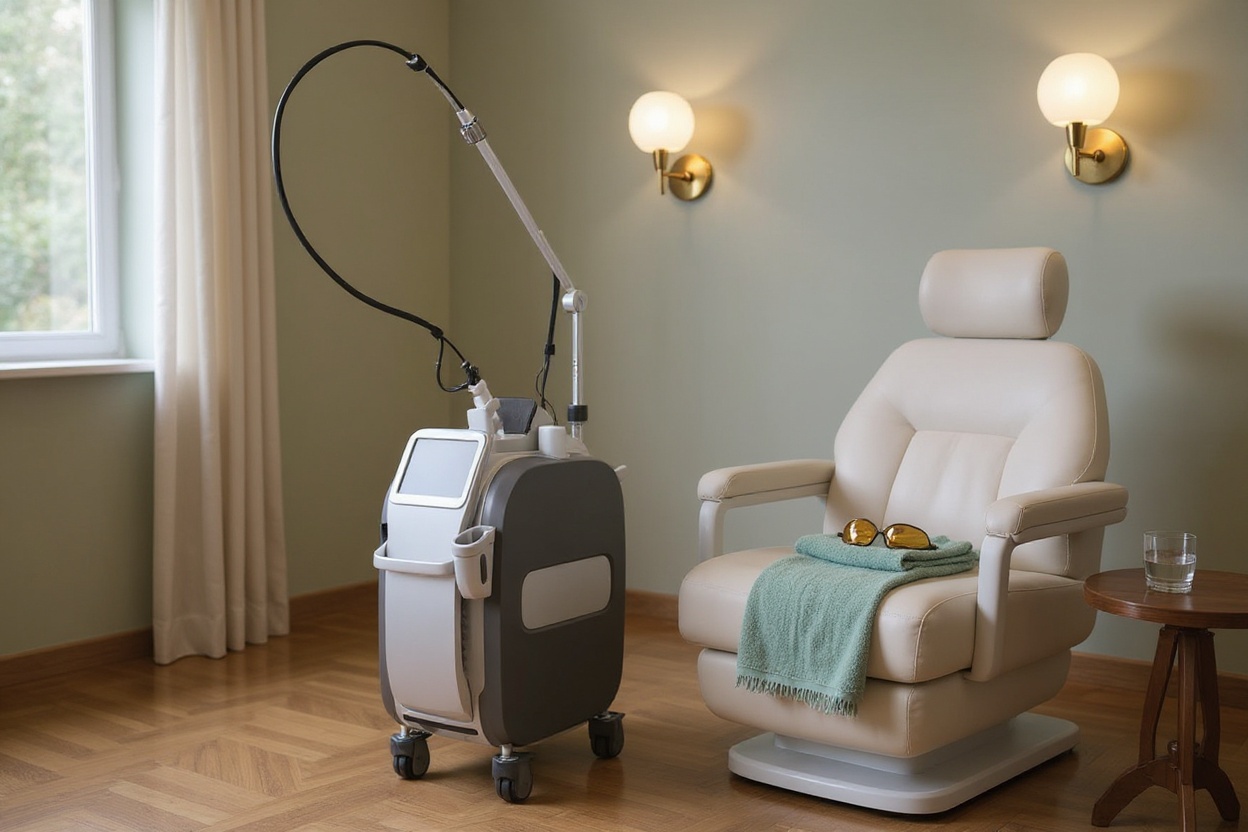
Setting expectations is one of the most important parts of any vein consultation. Both laser therapy and sclerotherapy are well-tolerated in-office procedures, but the experience and timeline differ depending on which approach is used and where the vessels are located.
Laser Treatment for Facial and Leg Spider Veins
During a laser session, most patients describe a brief snapping or warm sensation as the device pulses target each vessel. ASDS guidance describes laser therapy as the treatment of choice for facial spider veins, and most facial sessions are completed in under half an hour. In my practice, I typically use topical numbing cream for sensitive areas, especially when treating leg vessels. Treated vessels often look slightly darker for a few days after laser, then fade as the body absorbs them over the following weeks. Laser works best on smaller vessels and on facial veins where the risk of injection-related issues is higher, and I tailor settings to skin tone to reduce the chance of post-inflammatory pigment changes. Results vary based on vessel size, depth, and individual healing response, and many patients see meaningful, even though sometimes incomplete, clearance over the course of their treatment plan.
Sclerotherapy for Leg Spider Veins
Sclerotherapy uses a very fine needle to deliver sclerosing solution directly into the vein, often allowing me to treat several vessels in a single session. Patient education from Mayo Clinic notes that the procedure is well-tolerated, may produce a brief stinging or cramping sensation during injection, and typically requires no anesthesia. Treated veins may look more prominent for a short period before fading, and results may continue to develop over the first two months as the body clears the collapsed vessels. In my practice, most patients require two to four sessions spaced four to six weeks apart, and I often recommend compression stockings for several days after each session to support optimal results.
Combining Laser and Sclerotherapy for Comprehensive Clearance
Many patients benefit from a combination plan rather than a single modality. Cleveland Clinic patient education describes laser and sclerotherapy together as part of the broader vein-treatment toolkit, and that mirrors how I plan care. Sclerotherapy can address the larger spider veins and reticular feeder vessels, while laser cleans up smaller residual vessels that are too fine to inject safely. This kind of customization is one of the clearest reasons to choose physician-led care, because it depends on bedside judgment about which vessels respond best to which approach.
Consultation
Comprehensive vascular assessment and personalized plan
Treatment
Laser, sclerotherapy, or both, depending on vessel mix
Recovery
Brief activity modifications and compression where appropriate
Follow-up
Sessions four to six weeks apart, with gradual fade in between
Long-Term Outcomes and Maintenance Considerations

Once a spider vein has been successfully treated and absorbed, that specific vessel does not return. The vein has been collapsed and removed by the body, so the treated area is permanently cleared. What treatment cannot do is prevent new spider veins from developing elsewhere, because spider veins often arise from genetic predisposition, hormonal influences such as pregnancy or oral contraceptive use, prolonged standing, or other lifestyle factors. Many patients return for maintenance treatment every one to three years to address newly visible vessels as they appear, and this is a normal part of long-term skin and vascular care.
In my practice, I encourage patients to think about long-term satisfaction in a few ways. Maintaining a healthy weight, regular exercise, avoiding extended periods of immobility, and wearing compression during long flights or long workdays can all reduce the rate at which new vessels become visible. A thorough physician evaluation also identifies underlying venous insufficiency that, if untreated, can drive recurrent spider veins; addressing that underlying issue often improves long-term cosmetic outcomes. For patients with skin of color, choosing the right device settings is especially important to reduce the risk of post-inflammatory hyperpigmentation, and sclerotherapy is often a useful complement because it does not rely on heat absorption in the skin.
Why The Woodlands Residents Choose Physician-Led Spider Vein Treatment

Active professionals and families who value both appearance and health are increasingly choosing physician-led vascular care over medical-spa alternatives. In The Woodlands, that preference is partly cultural and partly practical: a board-certified dermatologist’s medical training allows me to evaluate underlying venous insufficiency, varicose veins, and circulatory factors that may need attention beyond cosmetic vein treatment. My dual board certification in dermatology and Mohs surgery reflects a depth of medical expertise that distinguishes physician-led care from technician-administered treatments, and it allows me to offer comprehensive cosmetic dermatology services under one roof.
For busy professionals balancing career and family, the convenience of receiving both medical evaluation and aesthetic treatment in a single physician-led practice removes the need for separate specialty referrals. Patients in Spring often appreciate having a single point of contact for both medical and cosmetic vascular concerns. Conroe families regularly travel to our practice for the same reason. Throughout the process, I focus on natural-looking results, gradual vein clearance that enhances confidence without an obvious or overdone appearance.
When Should You Schedule a Spider Vein Consultation?
A consultation is worth considering whenever spider veins begin to affect your confidence, your clothing choices, or your routine. If you have a family history of varicose veins or venous insufficiency, an early evaluation can identify underlying issues before they progress, even if treatment can wait. Leg heaviness, aching, or swelling that worsens through the day may signal venous insufficiency that warrants medical attention rather than cosmetic intervention alone, and over-the-counter remedies and compression stockings that have not produced improvement are also a reasonable trigger for a professional opinion.
Confidence-affecting vessels
Visible spider veins on the face or lower legs that you would like to clear
Family history
Relatives with varicose veins or venous insufficiency, even without symptoms
Persistent leg symptoms
Aching, heaviness, or swelling that worsens through the day
For patients planning a wedding, a beach vacation, or another event where they want clearer-looking skin, I generally recommend starting four to six months in advance so the treatment series and the natural fading process have time to play out. The decision to seek treatment is personal, and there is no medical urgency for purely cosmetic spider veins, but a board-certified dermatologist can help you understand your options and design a plan aligned with your goals.
What to Expect During Your Spider Vein Treatment Visit at Rêve Dermatology
A typical visit begins with a comprehensive vascular evaluation, where I assess the spider veins themselves, screen for underlying venous insufficiency, and discuss your goals so we can build a realistic plan together. For laser sessions, the skin is cleansed and protective eyewear is provided; the DermaV laser delivers precise pulses to each vessel, and most facial sessions take fifteen to thirty minutes while leg sessions can run thirty to forty-five minutes depending on the area. For sclerotherapy, I use a very fine needle to inject the sclerosing solution into each targeted vein, and most patients describe a brief pressure or stinging sensation that resolves quickly.
After treatment, I provide specific aftercare instructions tailored to the modality used, which may include activity modifications, compression garment use for leg treatments, and sun protection during the healing window. Most patients return to normal activities right away, although strenuous exercise is generally restricted for twenty-four to forty-eight hours after a session. Follow-up visits are scheduled four to six weeks apart so we can assess response and continue refining results, and throughout the process, the goal is both safety and a natural cosmetic outcome that complements your skin rather than calling attention to itself.
Physician-Led vs. Medical-Spa Spider Vein Treatment: Key Differences
| Care Element | Board-Certified Dermatologist Care | Medical-Spa Vein Treatment |
|---|---|---|
| Provider Training | Physician with medical degree, dermatology residency, and board certification in skin and vascular conditions | Nurse injector or aesthetician working under physician supervision or independently depending on state regulations |
| Vascular Evaluation | Comprehensive assessment for underlying venous insufficiency, varicose veins, and circulatory conditions that may require medical treatment | Focus on visible spider veins without dedicated evaluation for underlying medical conditions |
| Treatment Customization | Settings and sclerosing agents selected based on vessel size, depth, skin type, and medical history | Standardized protocols that may not always account for individual skin type or vascular anatomy |
| Safety Monitoring | Physician present during treatment to manage complications and adjust technique in real time | Physician may not be on-site during treatment; staff typically follow predetermined protocols |
| Continuity of Care | The same physician provides initial evaluation, treatment series, and long-term follow-up for new vein formation or complications | Different providers across visits may limit a long-term clinical relationship |
| Insurance Considerations | Medical evaluation may be covered by insurance if venous insufficiency is identified; cosmetic treatment is self-pay | Typically self-pay for all services; no medical diagnosis or insurance billing |
Hear From Our Community
A recent patient shared her experience with physician-led dermatologic care at our practice.
“I’m very pleased with the wonderful service I received. The office is calming and very beautifully decorated. Doctor was very knowledgeable; she explained everything step by step. I felt special! I would recommend them to my family, friends…”
— Linda
Excerpt from a publicly shared patient review. Individual experiences vary.
What I take from feedback like Linda’s is that careful, step-by-step communication matters as much as technical skill, especially for patients new to vein treatment. Spider vein care should feel collaborative from the first consultation forward.
Conclusion
Spider vein treatment offers proven, FDA-cleared options for reducing or eliminating unwanted facial and leg vessels: laser therapy for smaller vessels and facial spider veins, sclerotherapy for larger leg vessels, and a combination of the two when the vessel mix calls for it. Results require patience, since the body clears treated vessels gradually over the course of weeks rather than immediately, and that gradual change is part of what makes the outcome look natural rather than obviously treated. Physician-led care brings the medical expertise needed to identify underlying venous conditions and tailor the plan to your skin type, vessel anatomy, and aesthetic goals.
If you are considering vein care that prioritizes both medical safety and natural-looking results, I invite you to schedule a consultation at Rêve Dermatology, serving patients throughout The Woodlands and surrounding North Houston communities. Outcomes vary based on individual factors including vessel anatomy, skin type, and overall vascular health.
Ready to Address Spider Veins with Physician-Led Care?
Schedule a consultation with Dr. Oben to discuss your vein concerns and develop a treatment plan designed for your unique skin type and vascular anatomy.
This article is for educational purposes only and does not replace professional medical advice, diagnosis, or treatment. Spider vein treatment is used at Rêve Dermatology & Aesthetics as part of comprehensive dermatologic care. Results vary based on individual factors including anatomy, skin quality, and treatment history. The research cited reflects specific study populations and controlled settings; your results may differ. Always consult with a qualified dermatologist before starting any new treatment.
Double Board-Certified Dermatologist & Board-Certified Mohs Surgeon · Rêve Dermatology & Aesthetics, The Woodlands