

By Dr. Oben Blair Ojong, DO, FAAD
Board-Certified Dermatologist & Board-Certified Mohs Surgeon
Quick Insights:
Microneedling performed by a board-certified dermatologist uses medical-grade devices with precise depth control to stimulate collagen production, which research suggests can improve skin texture, pore appearance, and mild scarring. Professional treatment differs from at-home devices in safety protocols, sterile technique, and clinical calibration. Results develop gradually over several months as your skin’s natural healing response builds new collagen and elastin. If you’re considering microneedling, consulting a dermatologist can help determine the right approach for your unique skin concerns.
Key Takeaways
- Professional microneedling devices used by dermatologists offer precise depth control and sterile single-use needle cartridges not available with at-home rollers
- FDA-cleared indications include facial acne scars and wrinkles, with treatments typically requiring 3 to 6 sessions spaced 4 to 6 weeks apart
- The procedure triggers controlled micro-injuries that stimulate your body’s natural collagen production and wound healing response
- Dermatologist oversight ensures proper candidacy assessment, infection prevention, and treatment parameters calibrated to your skin type
Why It Matters
For patients seeking natural-looking skin improvements, understanding the difference between physician-performed microneedling and spa treatments matters for both safety and results. When you’re balancing a demanding career, an active lifestyle, and family commitments, you need treatments performed with clinical precision, minimal downtime, and realistic outcome expectations. These are the hallmarks of dermatology care guided by medical expertise rather than cosmetic trends.
What Makes Dermatologist-Performed Microneedling Different?
If you’ve been researching microneedling in The Woodlands, you’ve probably noticed this treatment is available at spas, beauty salons, and even as at-home roller kits. So why does it matter where you get it done? The answer comes down to clinical precision and safety oversight. The FDA classifies microneedling devices as Class II medical devices requiring premarket clearance and trained healthcare provider oversight. That classification exists for good reason: these devices penetrate your skin at controlled depths, reaching nerves and blood vessels.
The American Academy of Dermatology (AAD) recommends working with a board-certified dermatologist for microneedling procedures. AAD patient guidance confirms that professional in-office treatments with medical-grade devices differ significantly from at-home rollers in both safety protocols and achievable results. As Dr. Oben Blair Ojong, DO, FAAD, board-certified dermatologist and Mohs surgeon, I perform microneedling with professional equipment calibrated to each patient’s skin type, concerns, and healing capacity. In this article, I’ll walk you through how microneedling works, who benefits most, what to expect during your appointment, and why physician supervision makes a meaningful difference.
Important Safety Information
Microneedling is generally suitable for most adults aged 22 and older seeking skin texture improvement. However, certain conditions require evaluation before treatment. I do not recommend microneedling during active acne breakouts or active skin infections, and patients with bleeding disorders or those taking blood-thinning medications should discuss their options with a dermatologist before proceeding. Proper infection prevention, including device sterilization and single-patient-use needle cartridges, is essential for safe treatment. When performed by a qualified provider with professional equipment, microneedling carries a favorable safety profile; however, improper technique or non-sterile conditions can lead to infection, scarring, or pigmentation changes. This is one of the key reasons I encourage patients to choose a physician-led setting for their treatment.
How Microneedling Stimulates Your Skin’s Natural Healing Response

Microneedling, also called collagen induction therapy, works by creating controlled micro-injuries in the skin’s surface. According to Mayo Clinic Health System, this process triggers the body’s natural wound healing cascade, stimulating production of new collagen and elastin as part of the repair response. The result is gradual skin remodeling that happens from within.
What makes this approach appealing to many of my patients is that it uses your body’s own biology rather than introducing foreign substances. The American Society for Dermatologic Surgery (ASDS) describes microneedling as superficial controlled puncturing at a set depth that creates channels in the skin, activating the wound healing response to form new structural proteins. I use adjustable-depth, professional devices that allow me to calibrate needle penetration based on the treatment area, your skin’s thickness, and the specific concern we’re addressing.
Results are not immediate. Collagen remodeling is a gradual biological process. In my practice, I counsel patients to expect visible improvement developing over several weeks to months as new collagen accumulates and the skin rebuilds its structural framework.
What Physician-Grade Microneedling Can Address

I frequently see patients who want to improve their skin but aren’t sure which concerns medical-grade microneedling treatments can realistically address. Here’s what the evidence supports.
Skin Texture and Pore Appearance
Uneven skin texture and enlarged pores are among the most common concerns I hear from patients. The AAD includes large pores and uneven skin tone among the conditions microneedling can help improve. As new collagen forms around pore walls, the structural support can make pores appear smaller and skin texture smoother. Results vary based on your individual skin characteristics, which is where a thorough dermatologist assessment matters. I evaluate each patient’s skin type, degree of textural concerns, and realistic expectations before recommending a treatment plan.
Fine Lines and Facial Wrinkles
The FDA has cleared microneedling devices specifically for the treatment of facial wrinkles. The collagen stimulation effect can soften fine lines as new structural proteins fill in superficial creases. In my experience, microneedling tends to work best for mild to moderate fine lines rather than deep wrinkles. For patients with deeper aging concerns, I discuss whether additional or alternative modalities might better serve their goals.
Acne Scars and Mild Scarring
Acne scarring is one of the most well-recognized applications of microneedling, and the FDA has cleared devices specifically for this indication. According to AAD patient education resources, studies have found that a series of 3 to 5 professional treatments can fade acne scars by 50% to 70%, though individual results depend on scar depth, type, and your skin’s healing response. Multiple sessions are necessary, and improvement develops gradually as collagen remodeling fills in depressed scar tissue. I assess each patient’s scarring pattern to determine whether microneedling alone or a combination approach will provide the most meaningful improvement.
AAD Patient Education (2023): According to the American Academy of Dermatology, studies have found that a series of 3 to 5 professional microneedling treatments can fade acne scars by 50% to 70%. Individual results depend on scar depth, type, and the skin’s healing response.
Texture and Tone
Smoother, more even skin surface through collagen remodeling
Pore Appearance
Structural support around pore walls can reduce visible pore size
Scar Improvement
Collagen production gradually fills depressed acne scars over multiple sessions
Treatment Protocol and Timeline for Results
Understanding the treatment timeline helps set realistic expectations. In my practice, I typically recommend a series of sessions rather than a single appointment, because collagen remodeling is a cumulative process.
According to the Cleveland Clinic, optimal results typically require 3 to 6 sessions spaced several weeks apart, with best results developing over 3 to 6 months. Mayo Clinic Health System recommends spacing sessions 4 to 6 weeks apart, allowing time for healing and collagen formation between treatments. This interval gives your skin the chance to complete each repair cycle before we stimulate the next round of remodeling.
Individual response varies based on age, baseline skin condition, and the specific concern being treated. Some patients notice subtle improvement after the first session, while others see meaningful change after the second or third. Maintenance treatments may be recommended to sustain results over time, and I adjust each patient’s protocol based on how their skin responds. Rather than following a one-size-fits-all approach, I calibrate the treatment plan to your healing capacity and evolving goals.
Consultation
Skin assessment, candidacy evaluation, and personalized treatment plan
Treatment Sessions
3 to 6 sessions spaced 4 to 6 weeks apart with professional devices
Collagen Remodeling
Gradual improvement over weeks to months as new collagen forms
Maintenance
Periodic sessions as recommended to sustain long-term results
Why The Woodlands Residents Choose Board-Certified Dermatology for Microneedling

For health-conscious professionals and families throughout The Woodlands, the choice between a physician-led practice and a spa often comes down to one question: who do you trust with your skin? Professional microneedling devices offer precise depth calibration, sterile single-use needle cartridges, and adjustable settings that spa-level devices typically cannot match. The AAD’s patient guidance emphasizes that at-home rollers and spa treatments carry higher risks of complications, including infection and scarring, when performed without medical oversight.
Patients from Spring and Conroe tell me they value the assurance that comes with dermatologist-supervised care. For busy professionals near The Woodlands Waterway balancing demanding careers with personal wellness goals, that assurance matters more than convenience or lower prices at non-medical facilities. At our practice, every physician-supervised cosmetic treatment includes a thorough skin evaluation, contraindication screening, and treatment parameters tailored to your individual needs.
When Should You Consider a Microneedling Consultation?
You might benefit from a consultation if any of these sound familiar. The key is recognizing when professional assessment can guide you toward the right treatment rather than trial-and-error with consumer products.
Uneven skin texture that hasn’t improved with your current skincare routine
Enlarged pores that make you feel self-conscious about your complexion
Mild acne scarring that affects your confidence
Fine lines you’d like to address without injectables or surgery
Previous at-home microneedling without noticeable results
Uncertainty about whether microneedling is appropriate for your skin type
If you have active acne, skin infections, bleeding disorders, or take blood-thinning medications, a dermatologist consultation is especially important to determine whether treatment should proceed or be delayed. The ASDS emphasizes the importance of seeking treatment from a qualified dermatologic surgeon to ensure both proper candidacy assessment and safe execution. In my practice, I welcome patients who simply want to understand their options; there is no pressure to commit to treatment during a consultation.
What to Expect During Your Microneedling Appointment
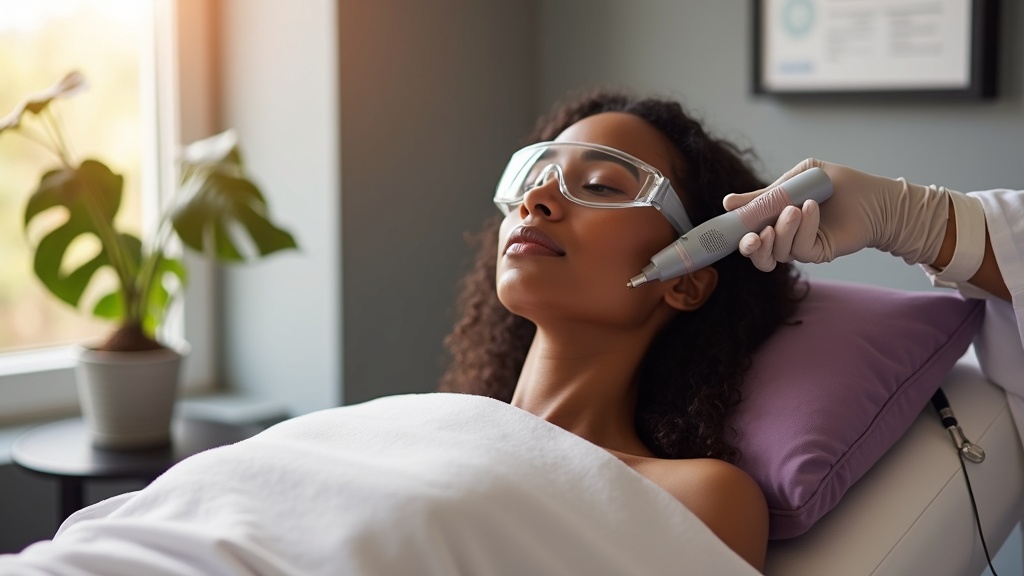
Here’s what a typical visit looks like at our practice. You’ll arrive with a clean face, free of makeup. I begin by assessing your skin, discussing your concerns and goals, and confirming appropriate treatment parameters for your skin type.
A topical numbing cream is applied and left in place for 20 to 45 minutes to ensure your comfort. In my experience, the actual treatment takes approximately 15 to 30 minutes depending on the area being treated. During the procedure, you may feel pressure or mild discomfort as the device passes over your skin creating controlled micro-punctures. Cleveland Clinic patient guidance confirms that most patients tolerate the procedure well with topical numbing alone, and no injections are required.
Immediately afterward, your skin will appear red and feel tight, similar to a mild sunburn. Most patients can resume normal activities the next day, though I recommend avoiding strenuous exercise for 24 to 48 hours. Post-care includes using a gentle cleanser, applying moisturizer, wearing sunscreen, and avoiding makeup for the first 24 hours. In my experience, redness typically resolves within one to three days for most patients, though some may experience mild swelling or sensitivity for up to five days.
| Aspect | Board-Certified Dermatologist | Spa or At-Home Device |
|---|---|---|
| Device Type | FDA-cleared devices with precise depth control and sterile single-use cartridges | Consumer or spa-grade devices; at-home rollers typically have fixed, shallow depth settings |
| Practitioner Training | Dermatologist with medical training in skin physiology, wound healing, and infection prevention | Esthetician training or self-administration without medical oversight |
| Candidacy Assessment | Comprehensive skin evaluation to identify contraindications, skin type considerations, and appropriate treatment parameters | Limited or no medical screening for bleeding disorders, active infections, or skin conditions |
| Sterile Technique | Medical-grade sterilization protocols and single-patient-use needle cartridges per FDA guidance | Variable sterilization practices; at-home devices may not maintain sterile conditions |
| Depth Calibration | Adjustable depth settings calibrated to individual skin type, concern, and treatment area | Fixed depth or user-controlled without clinical guidance on appropriate settings |
| Complication Management | Immediate access to medical intervention if adverse reaction occurs | Limited or no medical support if infection, scarring, or pigmentation changes develop |
Hear From Our Community
One of our patients recently shared her experience at our practice, reflecting the kind of transformation that begins with trusting the right provider.
“I have been going to Reve for just over a year now, all I can say is wow. When I went to Dr Ojong I was so depressed and struggling with my face. It was very discouraging to look in the mirror every day. She made me feel so welcomed and let me know I was not the only one at 50 years old going through this. I put my face in her hands and trusted her. As time went on I could see the results showing more and more… I am so pleased with my results.”
— Seandee
Excerpt from a publicly shared patient review. Individual experiences vary.
Seandee’s experience speaks to something I hear often: the most important step is making that first call. Whether your concern is skin texture, scarring, or simply wanting to feel more confident in your own skin, a personalized evaluation is where meaningful improvement begins.
Conclusion
Microneedling performed by your dermatologist offers physician-grade device precision, sterile technique, and clinical calibration that spa treatments and at-home devices simply cannot replicate. While the basic concept of controlled micro-injury sounds straightforward, the execution (proper depth settings, infection prevention, candidacy assessment, and parameters adjusted to your skin type) determines both safety and results. Outcomes depend on individual factors, and realistic expectations are part of every treatment plan I develop.
If you’re considering microneedling, I invite patients throughout The Woodlands and nearby communities including Tomball to schedule a consultation at Rêve Dermatology. Together, we’ll evaluate your skin concerns, discuss whether microneedling is the right fit, and design a treatment plan tailored to your goals.
Ready to Explore Microneedling?
Schedule a consultation with Dr. Oben to discuss your skin concerns and develop a personalized treatment plan designed for natural-looking results.
This article is for educational purposes only and does not replace professional medical advice, diagnosis, or treatment. Microneedling is used at Rêve Dermatology & Aesthetics as part of comprehensive dermatologic care. Results vary based on individual factors including anatomy, skin quality, and treatment history. The research cited reflects specific study populations and controlled settings; your results may differ. Always consult with a qualified dermatologist before starting any new treatment.
Double Board-Certified Dermatologist & Board-Certified Mohs Surgeon · Rêve Dermatology & Aesthetics, The Woodlands