

By Dr. Oben Blair Ojong, DO, FAAD
Board-Certified Dermatologist & Board-Certified Mohs Surgeon
Quick Insights:
Laser skin resurfacing uses fractional laser technology to treat fine lines, uneven texture, hyperpigmentation, and enlarged pores without surgery or extended recovery. Nonablative fractional lasers create controlled micro-injuries that stimulate collagen production while leaving surrounding tissue intact, allowing most patients to return to normal activities within days. Research suggests that multiple wavelengths can be customized to target different skin concerns and depths, with outcomes depending on individualized parameter selection. If you’re considering laser resurfacing, consulting a board-certified dermatologist can help determine the right approach for your unique skin type and goals.
Key Takeaways
- Fractional laser resurfacing treats multiple signs of aging — fine lines, texture irregularities, sun damage, and pore size — in a single treatment modality
- Nonablative approaches offer measurable skin improvement with minimal downtime (typically 3–5 days of mild redness) compared to traditional ablative resurfacing
- Studies indicate that treatment outcomes and safety profiles vary by wavelength, energy settings, and skin type — personalized parameter selection by an experienced dermatologist is essential for safe, effective results
- Multiple sessions spaced several weeks apart typically produce optimal results, with improvements continuing for months as new collagen forms
Why It Matters
For health-conscious professionals and families seeking physician-led aesthetic care, laser skin resurfacing offers a science-based alternative to invasive procedures. Busy adults balancing demanding careers with family responsibilities often prioritize treatments that deliver visible results without disrupting their schedules or requiring extended social downtime. When performed by a dermatologist with expertise in laser physics and skin biology, fractional resurfacing can address years of sun exposure, hormonal pigmentation, and early aging changes while respecting your skin’s unique characteristics and your lifestyle constraints.
What Is Laser Skin Resurfacing and How Does It Work?
Can you improve your skin’s texture, tone, and fine lines without surgery or a week of recovery? For many patients, the answer is yes. Laser skin resurfacing is a physician-performed procedure that uses targeted energy to stimulate your skin’s natural healing response — and modern fractional technology has made it more accessible than ever.
Unlike older full-field ablative lasers that removed entire layers of skin, today’s fractional approach treats only a portion of the skin surface in a precise pattern, leaving healthy tissue between treatment zones to accelerate healing. The American Society for Laser Medicine and Surgery (ASLMS) explains that this fractional method significantly reduces recovery time while still delivering measurable rejuvenation. Multiple wavelengths exist — including 1927 nm, 1550 nm, and 1940 nm — each targeting specific tissue depths and skin concerns.
As a board-certified dermatologist and Mohs surgeon, I use the LaseMD Ultra — a thulium fractional laser — at Rêve Dermatology in The Woodlands to customize treatments based on each patient’s individual skin concerns, type, and tolerance for downtime. My approach focuses on achieving natural-looking results while maintaining the highest medical safety standards.
Important Safety Information
Laser resurfacing must be performed by a qualified physician who understands laser-tissue interactions and can adjust parameters for different skin types. Patients with darker skin tones (Fitzpatrick types IV–VI) require conservative energy settings and experienced providers to minimize the risk of post-inflammatory hyperpigmentation. The American Academy of Dermatology (AAD) emphasizes the importance of dermatologist expertise in parameter selection across all skin types. Laser resurfacing is not appropriate for patients with active skin infections, recent isotretinoin use (within 6–12 months), a history of abnormal scarring, or unrealistic expectations. Pregnant or breastfeeding patients should postpone treatment, and sun protection compliance before and after treatment is mandatory. Patients with a history of cold sores may require antiviral prophylaxis. Results vary by individual — laser resurfacing improves skin quality but does not stop aging or replicate surgical outcomes.
The Science Behind Fractional Laser Technology
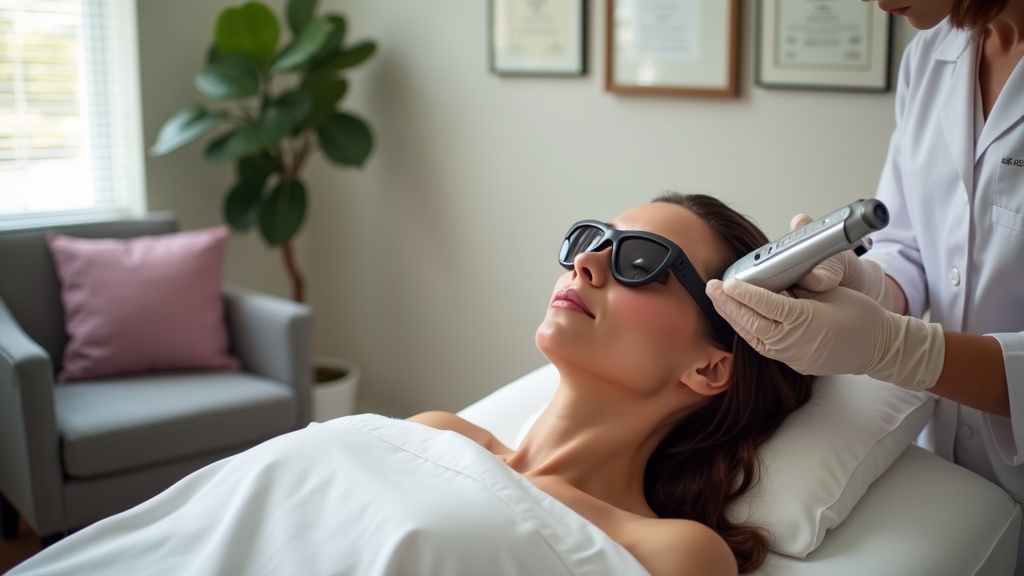
The concept behind fractional laser resurfacing is called fractional photothermolysis. Rather than treating the entire skin surface, the laser creates thousands of microscopic treatment zones — called microthermal zones — in a precise pattern. Between each zone, bridges of untreated tissue remain completely intact.
This design triggers a controlled wound-healing response. Your body recognizes the micro-injuries and responds by producing new collagen and elastin while clearing damaged cells. The untreated tissue serves as a reservoir of healthy cells that migrate into treatment zones, accelerating recovery compared to ablative resurfacing that removes entire skin layers. Mayo Clinic notes that nonablative approaches rejuvenate the skin without removing the surface layer, resulting in shorter healing times and fewer side effects than traditional ablative methods.
Different wavelengths target different depths and tissue components. Shorter wavelengths like 1927 nm target superficial pigment and texture irregularities, while longer wavelengths such as 1550 nm penetrate deeper for collagen remodeling. Water in the skin absorbs the laser energy, creating controlled heat that stimulates remodeling without destroying the epidermis. The LaseMD Ultra uses a thulium wavelength that balances effective penetration with a favorable safety profile — and in my practice, I adjust energy density, coverage percentage, and pass count based on each patient’s skin assessment.
What Laser Resurfacing Can Treat: Skin Concerns and Clinical Outcomes
Fine Lines, Wrinkles, and Skin Texture Improvement
Fractional laser resurfacing addresses early to moderate signs of photoaging by stimulating collagen remodeling beneath the skin’s surface. The collagen production process continues for several months after treatment, meaning results progressively improve over time. One clinical evaluation of a 1940 nm nonablative fractional laser in patients with facial photodamage demonstrated measurable improvement with 3–5 days of downtime and generally mild adverse effects (Journal of Drugs in Dermatology, 2014), though discomfort during treatment was moderate and required topical anesthesia. Deeper static wrinkles may require combination approaches, but fractional resurfacing excels at improving overall skin quality and fine textural concerns.
Hyperpigmentation and Sun Damage
Fractional lasers — particularly shorter wavelengths like 1927 nm — can effectively target superficial pigmentation from sun exposure, melasma, and age spots. A prospective multi-center trial in adults aged 30–80 with Fitzpatrick I–IV skin types found that 1927 nm nonablative fractional laser treatments yielded moderate to very significant pigmentary improvement in 82% of patients at one month, with 69% maintaining improvement at three months (Journal of Drugs in Dermatology, 2014). Pain and transient erythema were common but manageable, with no serious adverse events reported.
For patients with darker skin tones (Fitzpatrick IV–VI), conservative parameters are essential. A retrospective analysis of 61 patients demonstrated that low-energy, low-density 1927 nm fractional laser treatment achieved approximately 43% mean pigment clearance for post-inflammatory hyperpigmentation with no observed adverse events (Lasers in Surgery and Medicine, 2020). These findings indicate that fractional laser technology can safely improve pigmentation in skin-of-color patients when parameters are carefully selected by an experienced physician.
A retrospective analysis in Lasers in Surgery and Medicine (Bae et al., 2020, n=61) found that low-energy 1927 nm fractional laser treatment achieved approximately 43% mean pigment clearance in patients with Fitzpatrick IV–VI skin types — with no observed adverse events when conservative parameters were used.
Acne Scarring and Enlarged Pores
Fractional resurfacing improves acne scar appearance and pore size through collagen remodeling. In a randomized controlled trial of adults with Fitzpatrick IV–VI skin types and acne scarring, 1550 nm nonablative fractional laser produced significant improvements in scar scores at 16 and 24 weeks (Dermatologic Surgery, 2016). However, mild to moderate post-inflammatory hyperpigmentation occurred in a subset of patients — particularly at higher treatment densities — underscoring the need for careful patient counseling and conservative settings in darker skin types. Multiple sessions are typically needed for optimal scar remodeling, and results vary based on scar type (rolling, boxcar, ice pick) and depth. I discuss these factors during every consultation to set realistic expectations. Patients interested in learning more about our laser skin resurfacing and texture refinement treatments can explore the range of concerns we address.
Combining Laser Resurfacing With Other Treatments for Comprehensive Rejuvenation
While fractional laser resurfacing addresses texture, pigment, and collagen stimulation, it does not treat volume loss or dynamic wrinkles. This is where combination approaches can enhance your overall results.
A pilot case series in patients with Fitzpatrick III–IV skin types (ages 53–63) demonstrated that combining microneedling fractional radiofrequency with 1927 nm fractional thulium laser yielded synergistic improvements in wrinkles, texture, and pores with high patient satisfaction and no adverse events (Laser Therapy, 2018). While the small sample size (n=4) limits generalizability, the findings suggest that complementary modalities can enhance rejuvenation outcomes when properly sequenced.
In my practice, I may combine laser resurfacing with wrinkle relaxers for dynamic expression lines, dermal fillers for volume restoration, or collagen stimulators for deeper tissue support — creating a comprehensive facial rejuvenation plan tailored to each patient’s specific concerns. The American Society for Dermatologic Surgery (ASDS) emphasizes that proper candidacy evaluation and qualified provider selection are essential when combining treatments. Timing matters: some treatments must be spaced weeks apart, and physician oversight ensures safety throughout your treatment journey. Clinically, maintenance sessions every 6–12 months help sustain collagen production and prolong results. I invite you to explore our comprehensive cosmetic dermatology services to see how different treatments can work together.
Laser Skin Resurfacing in The Woodlands: Physician-Led Care for Busy Professionals

The Woodlands is a community where active lifestyles and professional demands often intersect. Many of my patients are health-conscious professionals, parents, and retirees who want meaningful skin improvement without disrupting their schedules or social commitments. In my experience, fractional resurfacing’s limited recovery period — typically 3–5 days of mild redness and light flaking — aligns well with busy lifestyles, allowing many patients to schedule treatments before a long weekend and return to work the following week.
Our area’s sunny climate and outdoor culture — from morning walks along The Woodlands Waterway to family afternoons at Rob Fleming Park — make sun damage and pigmentation common concerns. Fractional laser technology can effectively address these changes when combined with physician-supervised sun protection protocols. The AAD highlights that dermatologist expertise in parameter selection is critical for safe, effective treatment across diverse skin types — a priority in our vibrant, multicultural community. Rêve Dermatology serves patients throughout The Woodlands, Spring, and Conroe who are seeking physician-led aesthetic care that prioritizes natural-looking results.
When Should You Consider a Laser Resurfacing Consultation?
Rough, uneven skin texture that has not improved with topical products alone
Persistent brown spots, sun damage, or melasma that affects your confidence
Fine lines and early photoaging signs that you would like to address before they deepen
Acne scars or enlarged pores that impact skin smoothness
You are seeking a non-surgical rejuvenation option with minimal downtime that fits your lifestyle
A consultation allows me to personally assess your skin type, review your medical history, and discuss your aesthetic goals. Together, we determine whether fractional resurfacing, an alternative laser approach, or a combination strategy is the best fit. The ASDS recommends thorough candidacy evaluation before proceeding with any laser treatment. Many patients tell me they wish they had addressed these concerns sooner rather than waiting for them to progress. The consultation is a pressure-free opportunity to ask questions, review before-and-after examples, and understand realistic outcomes.
What to Expect During Your Laser Resurfacing Visit at Rêve Dermatology
Skin Assessment
I evaluate your skin type, pigmentation, texture concerns, and medical history to determine the right approach
Preparation
The treatment area is cleansed and topical anesthetic is applied approximately 30–45 minutes before the procedure
Treatment
The LaseMD Ultra handpiece is passed over the skin in a precise pattern — most patients describe a warm, prickling sensation; typically takes 20–30 minutes
Recovery & Follow-Up
Skin appears pink to red immediately after; most patients experience 3–5 days of mild redness and flaking, with makeup usually possible after 24–48 hours
In my practice, I begin every visit with a thorough skin assessment, reviewing your concerns, current skincare routine, and sun exposure habits. I examine your Fitzpatrick skin type classification, evaluate pigmentation and texture concerns, and discuss realistic outcomes based on your individual characteristics. During treatment, I adjust the LaseMD Ultra’s energy density, coverage percentage, and pass count in real time based on your skin’s response.
After treatment, you receive detailed post-care instructions including gentle cleansing, moisturizing protocols, and strict sun protection. In my practice, I typically recommend 3–4 treatment sessions spaced 4–6 weeks apart for optimal results, with collagen remodeling continuing for several months after your final session. Follow-up appointments allow me to monitor healing, assess progress, and plan subsequent sessions.
Choosing Your Provider: What to Consider
| Aspect | Board-Certified Dermatologist | Non-Physician Laser Provider |
|---|---|---|
| Provider training | Medical degree, dermatology residency, board certification in skin biology, laser physics, and wound healing | Varies; may include nurses, estheticians, or technicians with device-specific training |
| Skin assessment | Comprehensive evaluation including skin type classification, medical history review, skin cancer screening, and contraindication assessment | Focus on aesthetic concerns; medical evaluation depth varies by facility |
| Device selection & settings | Physician selects wavelength, energy, density, and depth based on individual skin characteristics and treatment goals | Settings may follow manufacturer protocols or facility standards with less individualization |
| Complication management | Immediate physician oversight for adverse reactions; can prescribe medications, adjust protocols, or provide medical interventions | May require referral to physician if complications arise beyond scope of practice |
| Comprehensive care | Can combine laser with prescription treatments, medical-grade skincare, and other physician-led procedures in a coordinated plan | Typically offers device-based treatments; prescription options require physician collaboration |
| Regulatory oversight | Medical practice regulations, physician liability, and professional board accountability | Varies by state; oversight depends on facility medical director involvement |
Hear From Our Community
One of our patients recently shared her experience with physician-led skin care at Rêve Dermatology.
“I have been going to Reve for just over a year now, all I can say is wow. When I went to Dr Ojong I was so depressed and struggling with my face… She made me feel so welcomed and let me know I was not the only one at 50 years old going through this. I put my face in her hands and trusted her. As time went on I could see the results showing more and more. Well needless to say a year later I am so pleased with my results.”
— Seandee
Excerpt from a publicly shared patient review. Individual experiences vary.
Read the full review
Seandee’s experience reflects what I hear from many patients: visible, progressive improvement that builds confidence over time. Every patient’s journey is unique, and outcomes depend on individual factors — but the foundation of great results is always a trusting relationship with a physician who understands your goals.
Conclusion
Fractional laser resurfacing offers a science-based approach to skin rejuvenation, addressing multiple concerns — texture, pigmentation, fine lines, and pores — without surgery or extended downtime. Research suggests that outcomes depend on proper device selection, individualized parameter adjustment, and physician expertise in treating diverse skin types safely. While results vary based on individual factors, most patients see progressive improvement over a series of treatments, with collagen remodeling continuing for months.
If you’re ready to explore what laser resurfacing can do for your skin, I invite you to contact Rêve Dermatology to schedule a consultation. Serving patients throughout The Woodlands and surrounding communities, I develop personalized treatment plans designed for natural-looking results and your lifestyle. Results vary by individual, and a consultation is the best way to understand your options.
Ready to Renew Your Skin?
Schedule a consultation to discuss your goals and create a laser resurfacing plan tailored to your skin type, concerns, and lifestyle.
This article is for educational purposes only and does not replace professional medical advice, diagnosis, or treatment. Laser skin resurfacing is used at Rêve Dermatology & Aesthetics as part of comprehensive dermatologic care. Results vary based on individual factors including anatomy, skin quality, and treatment history. The research cited reflects specific study populations and controlled settings; your results may differ. Always consult with a qualified dermatologist before starting any new treatment.
Double Board-Certified Dermatologist & Board-Certified Mohs Surgeon · Rêve Dermatology & Aesthetics, The Woodlands