
By Dr. Oben Blair Ojong, DO, FAAD
Board-Certified Dermatologist & Board-Certified Mohs Surgeon
Quick Insights:
Laser treatment for scars works by creating controlled micro-injuries that trigger collagen remodeling, gradually improving texture, thickness, and discoloration over multiple sessions. Research in aesthetic medicine shows fractional lasers can significantly reduce the appearance of acne scars, surgical scars, and traumatic scars with relatively low complication rates when performed by trained physicians. While lasers improve scar appearance—smoothing texture and fading redness or pigmentation—they refine rather than completely erase scars, with results varying by scar type, skin tone, and individual healing response. If you’re considering laser scar treatment, consulting a board-certified dermatologist can help determine the right approach for your unique needs.
Key Takeaways
- Fractional laser technology stimulates collagen remodeling to improve scar texture, thickness, and color without removing the entire skin surface
- Clinical trials demonstrate measurable improvement in acne scars, surgical scars, and traumatic scars, with most patients requiring 3-6 treatment sessions
- DermaV laser technology addresses both vascular (redness) and pigment (discoloration) components of scarring in a single platform
- Physician-operated laser treatment ensures proper device settings, skin type assessment, and safety protocols that reduce complication risk
Why It Matters
For health-conscious professionals and families in the greater Houston area, visible scarring from acne, surgery, or injury can affect both confidence and quality of life. Many adults seek scar improvement not for vanity, but because scarring impacts how they present themselves in professional settings or social situations. Physician-led laser treatment offers a science-based approach to scar refinement—one that prioritizes realistic expectations, appropriate candidate selection, and safety protocols tailored to diverse skin types. When performed by a board-certified dermatologist with advanced laser training, these treatments deliver measurable texture and color improvement while minimizing the risk of complications like post-inflammatory hyperpigmentation.
Understanding DermaV Laser Treatment for Scars in The Woodlands
Many adults live with visible scarring from acne, surgery, accidents, or skin conditions—and while scars are a natural part of healing, their texture and discoloration can be improved with the right approach. Laser scar treatment has emerged as a proven method that works by stimulating the skin’s own collagen remodeling process. This isn’t about complete removal or erasing scars entirely—it’s about refinement and improvement, setting realistic expectations from the start.
At Rêve Dermatology & Aesthetics, I use DermaV laser technology—an advanced fractional laser platform that addresses both the textural and color components of scarring. Research from aesthetic medicine and cosmetic procedure studies—including work published in journals across dermatology, plastic surgery, and general surgery—supports the use of fractional laser approaches for measurable scar improvement. A randomized controlled trial published in Annals of Surgery (2022) found that combination pulsed dye and fractional non-ablative laser treatment reduced scar thickness, stiffness, and erythema over 36 weeks with no severe adverse events, demonstrating the efficacy of laser-based scar management.
For patients throughout The Woodlands and surrounding North Houston communities, laser scar treatment offers a physician-led option for improving acne scars, surgical scars from skin cancer removal or other procedures, and traumatic scars from accidents or injuries. This article explores how laser treatment works on a biological level, what types of scars respond best, what to expect during treatment, and why physician-operated technology matters for both results and safety.
Important Safety Information
Laser scar treatment is safest when performed by a board-certified dermatologist who can assess skin type, scar characteristics, and individual healing factors. Patients with active skin infections, recent isotretinoin use (within 6-12 months), or certain autoimmune conditions may not be candidates. Darker skin types (Fitzpatrick IV-VI) require specialized settings to prevent post-inflammatory hyperpigmentation—physician expertise in skin-of-color treatment is critical. Pregnant or breastfeeding patients should postpone elective laser procedures. Anyone with a history of keloid scarring should discuss this during consultation, as laser treatment may not be appropriate. The American Academy of Dermatology emphasizes the importance of sun protection before and after treatment to prevent pigmentation changes.
How Fractional Laser Technology Remodels Scar Tissue
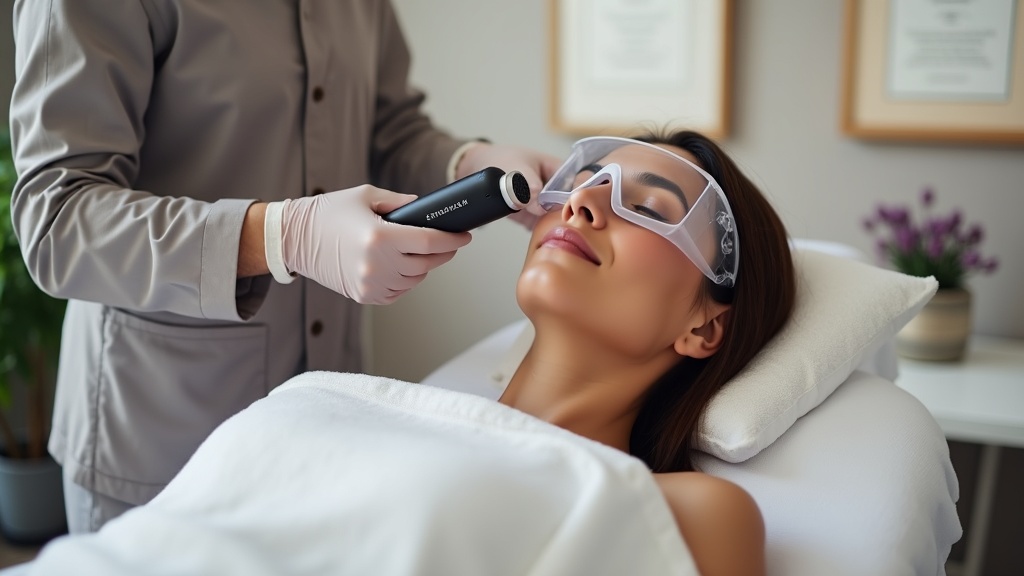
Fractional laser technology delivers columns of controlled thermal energy into the dermis, creating micro-injuries that leave surrounding tissue intact. This triggers the body’s wound-healing cascade—fibroblasts produce new collagen and elastin, gradually replacing disorganized scar tissue with more organized, smoother tissue architecture.
The key distinction lies in how fractional lasers operate compared to traditional resurfacing approaches. Ablative fractional lasers vaporize tissue in targeted columns, while non-ablative fractional lasers heat tissue without removing the surface. Both methods stimulate collagen remodeling, but they differ in downtime and intensity. Mayo Clinic explains that ablative approaches typically require more recovery time but may achieve more dramatic results, while non-ablative approaches offer gentler improvement with minimal downtime.
DermaV’s fractional technology can be adjusted for depth and density based on scar type and skin characteristics. The FDA has cleared fractional CO2 laser systems for indications including scar remodeling, establishing regulatory backing for these devices in dermatologic practice.
It’s important to understand that collagen remodeling is a gradual process. Visible improvement typically emerges over weeks to months as new tissue matures. The micro-injuries created by the laser initiate a controlled healing response that gradually improves texture, reduces thickness, and fades discoloration—but this is not an instant transformation. Patience and adherence to post-treatment protocols are essential for optimal results.
Clinical Evidence for Laser Scar Improvement

Acne Scar Texture Refinement
Research in laser medicine has established that fractional non-ablative lasers can produce measurable improvement in atrophic acne scars—the depressed or pitted scars that remain after inflammatory acne resolves. A randomized controlled trial published in Lasers in Medical Science (2010) evaluated a 1,540-nm non-ablative fractional laser in a split-face design, comparing treated versus untreated sides in patients with moderately atrophic facial acne scars. The study found significant texture improvement on the treated side compared to controls, with acceptable transient side effects. While this was a small study (10 patients per treated/untreated side), it demonstrated proof of concept for non-ablative fractional approaches.
Acne scars respond to laser treatment because the controlled injury stimulates collagen production in the depressed scar base, gradually raising the texture closer to the level of surrounding skin. However, deeper “ice pick” scars—narrow, deeply pitted scars that extend far into the dermis—may require combination approaches such as subcision (releasing tethered scar tissue) or punch excision alongside laser treatment for optimal results. Laser alone may not fully correct very deep, narrow scars, and setting realistic expectations during consultation is essential.
Surgical and Traumatic Scar Improvement
Laser surgery studies have compared fractional laser approaches to traditional scar revision techniques. A randomized controlled trial published in Dermatologic Surgery (2012) used a split-scar design to compare fractional CO2 laser resurfacing versus dermabrasion for postsurgical facial scars. Both treatments achieved similar cosmetic improvement, but laser treatment offered a more favorable safety and recovery profile—less bleeding, less risk of infection, and faster healing times.
The combination laser RCT referenced earlier (Kang et al., Annals of Surgery 2022) provides even stronger evidence. In that study, 76 patients who had undergone skin surgery with primary closure were randomized to receive either combination pulsed dye laser plus fractional non-ablative laser or no treatment. Over 36 weeks, the treatment group showed measurable reductions in scar thickness, stiffness, and erythema (redness) with no severe adverse events. This suggests that early intervention—treating scars within the first year after surgery or injury—can yield significant improvement.
Surgical scars benefit from laser treatment because the technology addresses both the textural irregularity (via collagen remodeling) and the vascular component (redness from increased blood vessel formation in healing tissue). However, results depend on scar location, tension on the wound during healing, and individual collagen response. Scars under constant tension (such as over joints or the chest) may be more resistant to improvement than scars in relatively static areas like the face.
Safety Profile and Complication Rates
One of the most reassuring findings in laser scar treatment research comes from large-scale safety data. A retrospective review published in Aesthetic Plastic Surgery (2017) evaluated clinical outcomes and complications in 730 patients treated with fractional lasers across diverse Fitzpatrick skin types. The overall complication rate was relatively low at approximately 4.2%, with most adverse events being mild and self-resolving. Different wavelengths yielded comparable efficacy for texture and pigment improvements, supporting the versatility of fractional laser platforms.
While the complication rate is low when performed by trained providers, risks do exist: temporary redness and swelling (similar to a sunburn), post-inflammatory hyperpigmentation (especially in darker skin types), and rare infection or scarring. This is why physician-operated treatment matters. A board-certified dermatologist adjusts parameters based on skin type, scar characteristics, and healing history—minimizing risk while maximizing improvement. In my practice, I perform a comprehensive skin assessment before any laser procedure to ensure we select the safest and most effective settings for each patient’s unique needs.
Combining Laser Treatment with Other Scar Therapies

Laser scar treatment often works best as part of a comprehensive scar treatment approach. For raised or hypertrophic scars, combining laser with intralesional corticosteroid injections can address both texture and thickness. For deep acne scars, subcision—a minor in-office procedure that releases tethered scar tissue—followed by laser skin resurfacing and texture refinement may yield better results than laser alone.
DermaV’s dual capability is particularly valuable here. The device addresses both vascular redness and melanin-based discoloration, allowing treatment of multiple scar components in one session. The American Society for Dermatologic Surgery notes that individualized treatment plans based on scar type, skin tone, and patient goals are the foundation of successful scar management.
Darker skin types (Fitzpatrick IV-VI) require careful parameter selection. Patients with deeper skin tones have a higher risk of post-inflammatory hyperpigmentation if laser settings aren’t properly calibrated. In some cases, we may perform test spots or use conservative initial settings to assess response and minimize pigmentation risk. My training in skin-of-color dermatology through the Skin of Color Society informs these treatment decisions—ensuring we achieve improvement without creating new pigmentation concerns.
It’s also important to set realistic expectations. Laser treatment improves scars but doesn’t erase them completely. Most patients require 3-6 treatment sessions spaced 4-8 weeks apart for optimal results. Improvement is gradual, emerging over the weeks and months following each session as collagen remodeling progresses. Patience, adherence to post-treatment protocols (including strict sun protection), and realistic goals are essential for satisfaction with outcomes.
Physician-Led Laser Scar Treatment for The Woodlands Residents
The Woodlands area is home to affluent professionals, active families, and health-conscious adults who value both results and safety. Many residents seek scar treatment not just for cosmetic reasons but because visible scarring affects confidence in professional or social settings—whether it’s acne scarring from adolescence, surgical scars from skin cancer removal or other procedures, or traumatic scars from accidents or injuries.
Located near Memorial Hermann The Woodlands Medical Center, Rêve Dermatology provides physician-led laser scar treatment with the expertise and safety protocols that health-conscious professionals expect. The Woodlands area has access to med spas and aesthetic clinics offering laser treatments, but physician-operated laser treatment provides a critical safety advantage: a board-certified dermatologist assesses skin type, scar biology, and medical history to select appropriate settings and minimize complication risk.
My dual board certification in dermatology and Mohs surgery means I understand both the cosmetic and medical aspects of scarring—including how scars form, how different skin types heal, and how to optimize outcomes while protecting skin health. This level of expertise matters especially for patients with darker skin tones, complex scar types, or prior complications from aesthetic procedures. Whether you’re preparing for professional presentations or social gatherings at Market Street, visible scarring shouldn’t hold you back from feeling confident in your appearance.
Patients from The Woodlands, Spring, and Conroe trust our practice for laser scar treatment because we combine advanced technology with physician-led care. Every treatment plan is individualized, every device setting is calibrated for your skin type, and every outcome is monitored with the same clinical rigor we apply to medical dermatology.
When Should You Consider Laser Scar Treatment?

You may be a good candidate for laser scar treatment if:
- You have atrophic acne scars (depressed or pitted scars) that affect skin texture and haven’t responded to topical treatments
- You have surgical scars from skin cancer removal, cosmetic procedures, or other surgeries that remain raised, red, or textured beyond the first few months of healing
- You have traumatic scars from accidents or injuries that cause texture irregularity or persistent discoloration
- Your scars are affecting your confidence in professional or social situations and you’re seeking a science-based improvement option
Many patients tell me they’ve lived with scarring for years, assuming nothing could be done—but laser technology has advanced significantly, and we can often achieve meaningful texture and color improvement even in mature scars. The best time to start is when the scar has fully healed (typically 3-6 months after injury or surgery) but before it becomes deeply established.
A consultation involves assessing scar type, skin tone, and realistic goals. The American Academy of Dermatology recommends consulting a board-certified dermatologist for laser procedures to ensure proper technique and safety protocols. There’s no pressure—just an honest conversation about what’s possible.
What to Expect During Laser Scar Treatment at Rêve Dermatology
During your initial consultation, I examine the scar(s), assess your skin type and tone, and discuss your goals and medical history (including any history of keloid scarring, recent isotretinoin use, or autoimmune conditions). I explain which laser settings and treatment approach will work best for your specific scar type—whether that’s fractional ablative resurfacing for deeper texture improvement or non-ablative fractional treatment for more gradual remodeling with minimal downtime.
On treatment day, the area is cleansed and a topical numbing cream is applied for comfort. The laser is passed over the scar in a controlled pattern—most patients describe the sensation as warm prickling or snapping. Treatment time varies by scar size but typically ranges from 15-45 minutes.
Immediately after treatment, the area may be red and slightly swollen, similar to a sunburn. These effects typically resolve over 3-7 days depending on treatment intensity. You’ll receive specific post-care instructions including gentle cleansing, moisturizing, and strict sun protection. Most patients need 3-6 sessions spaced 4-8 weeks apart, with gradual improvement visible as collagen remodeling progresses over the months following each treatment.
Board-Certified Dermatologist vs. Medical Spa: What’s the Difference?
| Aspect | Board-Certified Dermatologist | Medical Spa or Aesthetic Clinic |
|---|---|---|
| Operator training | Physician with medical degree, dermatology residency, and advanced laser certification | May be nurse, esthetician, or technician operating under protocols; training varies |
| Skin assessment | Comprehensive evaluation of skin type, scar biology, medical history, and contraindications | Focus on scar appearance; may not assess underlying skin conditions or healing factors |
| Device settings | Customized parameters based on Fitzpatrick skin type, scar depth, and individual response | Often standardized settings; limited ability to adjust for complex cases |
| Complication management | Immediate physician oversight if adverse reaction occurs; can prescribe medications or adjust treatment | May require referral to physician if complications arise |
| Treatment planning | May combine laser with other medical therapies (injections, subcision) for optimal results | Typically offers laser treatment alone |
| Skin-of-color expertise | Training in managing diverse skin types and preventing post-inflammatory hyperpigmentation | Variable experience with darker skin tones |
Hear From Our Community
One community member recently shared their experience with comprehensive scar and pigmentation treatment at our practice.
“This was my first time ever going to a Dermatologist and my only regret was not going sooner. Dr. Oben Ojong was so nice and addressed all my skin concerns. I’ve had acne, acne scarring, and hyperpigmentation my whole life pretty much and I’ve tried EVERYTHING! The staff was extremely nice, the office itself is clean and very aesthetic yet professional. This will definitely be an office I continue to go to and I would highly recommend!”
— Kasia
Excerpt from a publicly shared patient review. Individual experiences vary.
Kasia’s experience reflects what many patients discover when they finally seek treatment for long-standing skin concerns: that physician-led care, advanced technology, and a personalized approach can make a meaningful difference in both appearance and confidence.
Conclusion
Laser scar treatment offers a proven, science-based approach to improving the texture and discoloration of acne scars, surgical scars, and traumatic scars. Research from aesthetic medicine and laser surgery demonstrates that fractional laser technology can achieve measurable improvement in scar thickness, texture, and color—but realistic expectations and proper technique matter. While lasers refine and smooth scars rather than erasing them completely, many patients find the improvement meaningful for both appearance and confidence.
Physician-operated treatment ensures safety, appropriate candidate selection, and customized settings for your skin type and scar characteristics. The American Society for Dermatologic Surgery emphasizes the importance of operator qualifications and safety standards for laser procedures—underscoring the value of board-certified dermatologist oversight.
If you’re living with scarring that affects how you feel about your skin, a consultation can help you understand what’s possible. I serve patients throughout The Woodlands and surrounding North Houston communities, including Spring, Conroe, and Tomball. Schedule your consultation to discuss your specific scar concerns and create a personalized treatment plan designed for your unique skin.
Ready to Explore Laser Scar Treatment?