

By Dr. Oben Blair Ojong, DO, FAAD
Board-Certified Dermatologist & Board-Certified Mohs Surgeon
Quick Insights:
Stretch marks are a common skin texture concern that can be improved—though not completely erased—with energy-based stretch mark treatment in The Woodlands using fractional lasers and microneedling. Active red or purple stretch marks tend to respond more favorably to treatment than mature white or silver ones, and outcomes vary based on skin type, treatment timing, and individual healing response. Board-certified dermatologists use FDA-cleared devices and combination approaches to support collagen remodeling and texture improvement while keeping expectations grounded. If you’re considering stretch mark treatment, consulting a board-certified dermatologist can help determine the right approach for your unique skin and goals.
Key Takeaways
- Laser and microneedling treatments can improve stretch mark appearance by supporting collagen and elastin production, though complete removal is not a realistic goal
- Active (red or purple) stretch marks typically respond better to treatment than mature (white or silver) stretch marks because of increased vascularity and inflammation
- Multiple treatment sessions are usually needed, and results vary by skin type, stretch mark age, and individual healing response
- Physician-led practices use FDA-cleared devices like LaseMD Ultra and DermaV combined with microneedling to optimize results while keeping outcome expectations honest
Why It Matters
For health-conscious professionals and active families who care about both wellness and appearance, stretch marks from pregnancy, growth spurts, or weight changes can affect confidence in everything from work settings to recreational activities. Affluent adults seeking natural-looking cosmetic improvements want honest guidance on what’s actually achievable—not exaggerated promises. Understanding which treatments are FDA-cleared, how different stretch mark types respond, and what meaningful improvement looks like helps you make informed decisions about physician-led care that fits your aesthetic goals and busy lifestyle.
Understanding Stretch Mark Treatment Options in The Woodlands: What Lasers and Microneedling Can Actually Do
One of the most common questions I hear in my practice is whether stretch marks can really be treated—and if so, what results are actually achievable. Stretch marks, known medically as striae, are a form of dermal scarring. They cannot be completely removed, but their texture and appearance can be meaningfully improved with energy-based treatments. As a board-certified dermatologist and Mohs surgeon, I focus on honest education first: stretch mark care works best when patients understand what FDA-cleared devices can do, how different stretch mark types respond, and what consistent, physician-led treatment looks like over time.
Professional society guidance from the American Academy of Dermatology indicates that energy-based treatments can improve stretch mark appearance, though outcomes vary significantly by individual factors including stretch mark age and skin type. In my approach, I combine LaseMD Ultra fractional thulium laser resurfacing, DermaV laser for vascular concerns in newer stretch marks, and microneedling—layered thoughtfully rather than promising any single device will deliver dramatic results. The rest of this article walks through how active and mature stretch marks respond differently, what treatment involves, and how to know whether you’re a good candidate.
Important Safety Information
Laser and microneedling treatments should be performed by trained dermatologic clinicians using FDA-cleared devices. Patients who are pregnant or breastfeeding should postpone treatment until after delivery and the postpartum period. Anyone with active skin infections, a personal or family history of keloid scarring, or certain inflammatory skin conditions should consult their dermatologist before scheduling treatment. Skin type also matters: darker skin types require carefully adjusted laser settings to minimize the risk of post-inflammatory pigmentation. Honest expectations are essential—improvement, not perfection, is the goal of every treatment plan.
How Stretch Marks Form and Why They’re Challenging to Treat

Stretch marks form when skin stretches faster than the underlying tissue can adapt. Pregnancy, adolescent growth spurts, rapid weight gain or loss, and bodybuilding-related muscle growth are the most common triggers. When the dermis stretches beyond its elastic capacity, collagen and elastin fibers tear, leaving behind a thinned epidermis, disrupted collagen architecture, and reduced elastin. The result is a form of dermal scarring that behaves differently from surface-level skin concerns.
Stretch marks pass through two main visual phases. Active stretch marks, called striae rubrae, appear red or purple because of inflammation and dilated blood vessels in the surrounding tissue. Over months to years, those mature into striae albae—the silvery or white stretch marks most patients eventually see. This shift is important clinically because newer, more vascular lesions have more biological “targets” for energy-based treatments to engage. Institutional guidance from Mayo Clinic reinforces that outcomes are influenced by lesion age, skin type, and treatment timing, with grounded expectations consistently required.
Energy-based treatments work by creating controlled micro-injuries that prompt the body’s natural wound-healing response. That response can support new collagen and elastin formation, which gradually improves stretch mark texture and color. Many patients ask about pregnancy-related stretch marks specifically, since these are some of the most common reasons women come in for consultations; Johns Hopkins Medicine notes that pregnancy-related skin changes often involve realistic patient counseling about what energy-based therapies can and cannot do. The honest answer: because stretch marks involve structural changes in the deeper dermis, complete restoration to pre-stretch-mark skin is not achievable with any current technology. Improvement is, however, very much within reach.
Laser and Microneedling Approaches for Stretch Mark Improvement
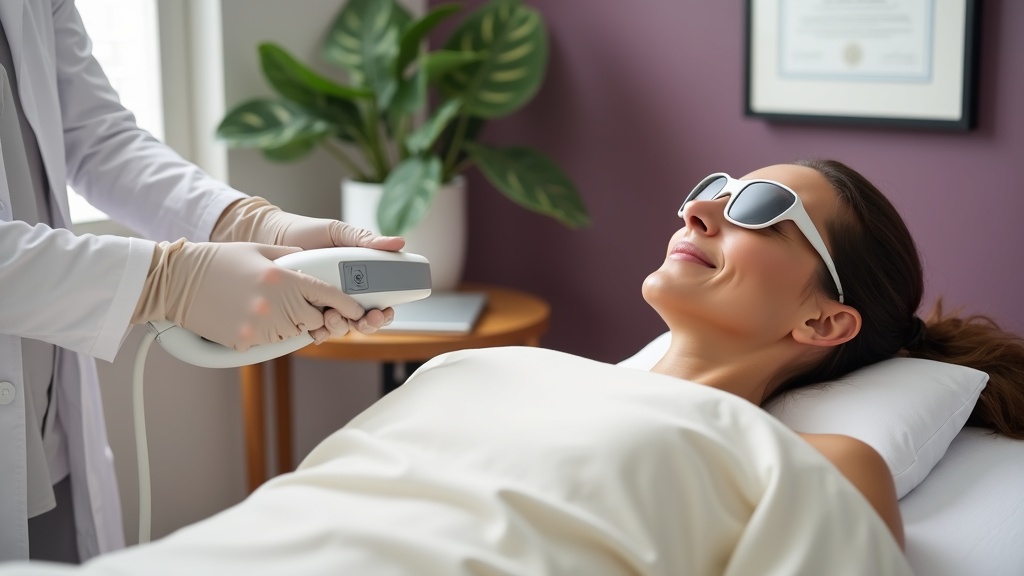
In my practice, stretch mark care typically draws on three energy-based tools, each with a different mechanism. I select among them based on stretch mark age, skin type, and treatment area, often in combination.
Fractional Laser Resurfacing (LaseMD Ultra)
Fractional thulium laser resurfacing creates microscopic columns of treated tissue surrounded by intact, untreated skin. That pattern allows the body to heal quickly while supporting collagen remodeling underneath the surface. Clinically, LaseMD Ultra is used for skin resurfacing and texture refinement and falls within the FDA-cleared device categories used for that purpose. For stretch marks, this approach can help refine texture, thickness, and overall appearance, though some patients see noticeable texture improvement while others experience more modest changes.
Multiple sessions are typically required. Professional society guidance from the American Society for Dermatologic Surgery positions laser therapy as providing partial improvement after a series of sessions, with results that vary by individual rather than guaranteed outcomes. If fractional laser resurfacing treatments for texture improvement are part of your plan, expect the conversation to focus on meaningful incremental improvement, not before-and-after photos that promise transformation.
Vascular Laser Treatment (DermaV) for Active Stretch Marks
Red and purple stretch marks contain more dilated blood vessels than mature ones, which makes them candidates for vascular laser treatment. DermaV targets hemoglobin in those vessels, helping to reduce redness and inflammation. This approach is most useful while stretch marks are still in the active, vascular phase, and it can be combined with resurfacing treatments for layered benefit. As stretch marks mature into striae albae and lose their vascular character, this particular pathway becomes less applicable—mature white stretch marks simply lack the vascular targets DermaV is designed to engage.
Microneedling for Collagen Stimulation
Microneedling uses fine, sterile needles to create controlled micro-channels in the dermis, prompting the same wound-healing cascade that drives collagen and elastin production. According to the American Society for Dermatologic Surgery’s microneedling guidance, the procedure is a minimally invasive option for texture improvement that has been applied to scars and stretch marks. Professional microneedling devices are regulated by the FDA as medical devices and should be used under appropriate physician supervision, not in non-medical settings.
Professional society guidance indicates that energy-based treatments for stretch marks—including fractional laser, vascular laser, and microneedling—can support partial improvement when used in a series of sessions, with outcomes shaped by stretch mark age, skin type, and individual healing response.
Outcomes depend on treatment depth, the number of sessions, and how each patient heals. In my practice, professional microneedling treatments are often paired with laser sessions to address multiple aspects of stretch mark appearance at once.
Combination Approaches and Grounded Outcome Expectations
Stretch marks rarely respond to a single device used in isolation. In my practice, I often layer treatments to address different elements of the same lesion—vascular laser to address redness in active stretch marks, fractional resurfacing to refine texture, and microneedling sessions to further support collagen response. This kind of combination plan respects the biology: stretch marks involve color, texture, and structural disruption, and no one treatment is well-suited to all three at once.
Timing also matters. Starting while stretch marks are still red or purple typically yields better improvement than waiting until they have matured into white striae. Cleveland Clinic patient education reinforces that treatment improves the appearance of stretch marks but that they may not disappear completely, which is exactly the conversation I have with patients before any plan begins. Skin type is another important variable. Darker skin types in the Fitzpatrick IV–VI range require carefully selected laser settings and clinician experience to minimize the risk of hyperpigmentation, and Mayo Clinic patient education specifically names skin type as one of the key factors that influence outcomes.
A few honest expectations are worth setting up front. Improvement is gradual—patients typically see changes over a series of sessions, not after one visit. Sessions are spaced weeks apart to allow the skin to remodel between treatments. Results are not permanent in the sense that new stretch marks can develop later if the skin stretches again, such as during a subsequent pregnancy or significant weight change. Honest framing during consultation is part of getting a good cosmetic outcome.
Physician-Led Stretch Mark Treatment in The Woodlands
Many active professionals and families in The Woodlands, Spring, and Conroe care equally about health and appearance, and they appreciate honest, science-based guidance on cosmetic concerns. Stretch marks come up frequently after pregnancy, after significant fitness transformations, and after adolescent growth spurts. Patients often arrive having tried over-the-counter creams or topical retinoids and want to know what medical-grade treatment can realistically add.
For residents who enjoy outdoor activities along the The Woodlands Waterway or participate in community fitness events, stretch marks can affect comfort and confidence in clothing choices for everyday and recreational settings. That’s part of why physician-led care matters: stretch mark treatment requires an understanding of skin physiology, wound healing, and how to adjust laser settings for different skin types. My dual board certification in dermatology and Mohs surgery reflects training in skin structure and healing that informs how I plan cosmetic treatments and how I set expectations for each patient. At Rêve Dermatology, treatment relies on medical-grade devices, including LaseMD Ultra and DermaV, alongside physician-supervised protocols rather than templated packages.
When Should You Consider a Stretch Mark Consultation?
A consultation often makes sense in a few specific situations. You may be a good candidate if you have newer, red or purple stretch marks and want to address them while they’re most responsive to treatment. You may also benefit from consultation if you have completed your family or reached a stable weight and want to improve the appearance of mature stretch marks. Many patients schedule when they want honest guidance on what’s achievable for their skin type and stretch mark characteristics, or when over-the-counter products have not produced the change they hoped for and they want to explore medical-grade options.
I often tell patients that many people wait years before seeking treatment, assuming nothing can be done. According to American Academy of Dermatology guidance, early lesions tend to respond better to treatment, which is why seeking evaluation sooner can expand the options on the table. Even mature stretch marks can show meaningful improvement with the right combination plan and grounded expectations. A consultation helps determine which treatments are appropriate for your skin type, stretch mark age, and goals.
You have newer, red or purple stretch marks and want to address them while they’re most responsive to treatment
You’ve completed your family or reached a stable weight and want to address mature stretch marks
You want honest, physician-led guidance on what’s achievable for your skin type and stretch mark characteristics
Over-the-counter products have not delivered the change you hoped for and you want to explore medical-grade options
What to Expect During Stretch Mark Treatment at Rêve Dermatology

A typical visit begins with a careful consultation. I examine your stretch marks, assess their age (active or mature), note the location and distribution, and evaluate your skin type using the Fitzpatrick classification. We then talk through what’s achievable for your specific situation: how much improvement is possible, how many sessions are likely needed, and what the timeline looks like across weeks and months.
Treatment sessions vary by modality. Laser treatments begin with cleansing the area and applying a topical numbing cream if you’d like, followed by delivery of controlled laser energy. Most patients describe a warm, snapping sensation rather than pain. Microneedling involves similar preparation with topical numbing, followed by the device creating fine micro-channels in the treated area. In my practice, sessions typically last 30 to 45 minutes depending on treatment area size. After treatment, mild redness and sensitivity for a few days is normal, and patients receive detailed aftercare instructions before they leave. In my practice, I generally schedule sessions four to six weeks apart so the skin has time to remodel between treatments. Follow-up appointments allow me to track progress and adjust the treatment plan as needed.
Consultation
Skin and stretch mark assessment, Fitzpatrick typing, treatment plan
Treatment
Topical numbing, laser or microneedling, 30–45 minutes
Recovery
Mild redness for a few days, detailed aftercare
Follow-Up
Progress check 4–6 weeks later, plan adjustments
Choosing the Right Provider: Physician-Led Practice vs. Medical Spa
| Consideration | Physician-Led Dermatology Practice | Medical Spa or Aesthetic Clinic |
|---|---|---|
| Provider Training | Dermatologist with specialized training in skin physiology, wound healing, and laser safety | Nurse, esthetician, or technician with device-specific training |
| Device Selection | Medical-grade, FDA-cleared laser and microneedling systems (such as LaseMD Ultra and DermaV) with customizable settings | Variable—may use professional-grade or consumer-level devices |
| Skin Type Assessment | Comprehensive Fitzpatrick skin type evaluation, with laser settings adjusted to support safety in deeper skin tones | Often a standardized protocol with less individualized adjustment |
| Expectation Setting | Detailed discussion of outcomes based on stretch mark age, skin type, and individual healing response | Outcomes-focused messaging may emphasize stronger language than evidence supports |
| Medical Oversight | Physician present for evaluation, treatment planning, and management of any complications | Physician may be off-site or available for consultation only |
| Comprehensive Care | Related concerns such as skin laxity, pigmentation, and scarring can be addressed within the same practice | Generally focused on standalone cosmetic services |
Hear From Our Community
One community member recently shared their experience with our team in a public Google review.
“Dr Ojong and the team at Rêve Dermatology and Aesthetics are very professional, kind and compassionate, I love been always greeted with a smile, in a space that is calm and welcoming. I trust that I am in safe hands at Rêve Dermatology Aesthetics and highly recommend the practice.”
— Bolawelo
Excerpt from a publicly shared patient review. Individual experiences vary.
That sense of feeling safe and well cared for is what I aim for in every stretch mark consultation. Cosmetic concerns can carry real emotional weight, and a calm, professional environment is part of the treatment plan—not separate from it.
Conclusion
Stretch mark treatment in The Woodlands can meaningfully improve the appearance of striae using fractional laser resurfacing, DermaV vascular laser treatment, and microneedling. Honest expectations matter: these are texture and color improvement approaches, not removal methods. Active red or purple stretch marks respond better than mature white ones, multiple sessions are typically required, and individual outcomes vary based on skin type and healing response. Choosing physician-led care supports access to FDA-cleared devices, appropriate skin type assessment, and candid counseling on what’s actually achievable.
If you’re considering stretch mark treatment and want a candid assessment of your options, I invite you to schedule a consultation at Rêve Dermatology. We provide comprehensive evaluations and personalized treatment plans using medical-grade technology, serving patients throughout The Woodlands and surrounding North Houston communities.
Ready to Explore Stretch Mark Treatment?
Schedule a consultation with Dr. Oben to discuss your stretch mark concerns and develop a treatment plan designed for your unique skin type and goals.
This article is for educational purposes only and does not replace professional medical advice, diagnosis, or treatment. Stretch mark treatment is used at Rêve Dermatology & Aesthetics as part of comprehensive dermatologic care. Results vary based on individual factors including anatomy, skin quality, and treatment history. The research cited reflects specific study populations and controlled settings; your results may differ. Always consult with a qualified dermatologist before starting any new treatment.
Double Board-Certified Dermatologist & Board-Certified Mohs Surgeon · Rêve Dermatology & Aesthetics, The Woodlands