

By Dr. Oben Blair Ojong, DO, FAAD
Board-Certified Dermatologist & Board-Certified Mohs Surgeon
Quick Insights:
Laser treatment targets the visible blood vessels and diffuse redness associated with rosacea and vascular conditions by delivering precise wavelengths of light energy that are absorbed by hemoglobin in dilated vessels. Multiple FDA-cleared laser systems, including pulsed dye lasers and intense pulsed light devices, have demonstrated effectiveness in reducing facial erythema and telangiectasia with minimal downtime. When performed by a board-certified dermatologist, vascular laser therapy offers a safe, evidence-based approach to managing persistent facial redness that doesn’t respond adequately to topical treatments alone. If you’re considering laser treatment for redness in The Woodlands, consulting a board-certified dermatologist can help determine the right approach for your vascular skin concerns.
Key Takeaways
- Vascular lasers target hemoglobin in dilated blood vessels, reducing visible redness and broken capillaries without damaging surrounding skin tissue
- Clinical studies show significant improvement in facial erythema, telangiectasia, and rosacea-related symptoms with favorable safety profiles across multiple laser modalities
- Most patients require 3-5 treatment sessions spaced several weeks apart, with results that can last months to years depending on individual skin response and maintenance
- FDA-cleared laser systems are safe for various skin types when treatment parameters are customized by an experienced, board-certified dermatologist
Why It Matters
For health-conscious professionals and families seeking physician-led dermatology care, persistent facial redness can affect both confidence and quality of life. Whether you’re managing rosacea flare-ups triggered by heat and stress, addressing visible spider veins that have developed over time, or seeking to reduce diffuse redness that makes you appear flushed even when you’re not, vascular laser treatment offers a science-based solution. Affluent adults who prioritize natural-looking results appreciate that laser therapy works with your skin’s biology to gradually fade redness while preserving your natural complexion—no masks, no prolonged downtime, and results that colleagues and friends notice without knowing exactly what you’ve done.
Understanding Laser Treatment for Redness in The Woodlands
Persistent facial redness affects millions of adults, creating visible concerns that topical treatments alone cannot adequately address. Whether you experience constant background flushing, visible spider veins across your cheeks and nose, or rosacea flare-ups triggered by heat and stress, the underlying issue is vascular—dilated blood vessels that have become chronically visible through the skin. While prescription creams and oral medications can help manage inflammatory rosacea symptoms, they don’t eliminate the structural blood vessel changes that create lasting redness. This is where vascular laser technology becomes valuable as part of a comprehensive dermatology approach.
At Rêve Dermatology & Aesthetics in The Woodlands, I offer DermaV laser treatment as part of comprehensive care for rosacea and vascular skin conditions. My approach involves customizing laser protocols based on your individual skin type, redness pattern, and treatment goals—not applying one-size-fits-all settings. A systematic review of laser and light-based therapies for rosacea found that pulsed dye laser (PDL) generally has the strongest evidence among laser/light devices for reducing facial erythema and telangiectasia, though the overall quality of evidence across different modalities remains low-to-moderate. This acknowledgment of evidence limitations is important—vascular laser therapy works, but outcomes depend significantly on proper device selection, customized treatment parameters, and physician expertise.
Important Safety Information
Vascular laser treatment is generally well-tolerated when performed by a board-certified dermatologist who can customize settings for your skin type. Temporary side effects may include mild swelling, redness, and bruising that typically resolve within days to a week. Patients with darker skin tones (Fitzpatrick types IV-VI) require careful parameter adjustment to minimize pigmentation changes. Those who are pregnant, have active skin infections, are taking photosensitizing medications, or have certain bleeding disorders should consult their dermatologist before treatment.
Ideal candidates are adults with persistent facial redness, visible telangiectasia, or diagnosed rosacea who seek medical treatment for vascular skin conditions. Individuals with unrealistic expectations about single-session results or those seeking complete elimination of all redness may not be ideal candidates—laser therapy significantly improves vascular lesions but works gradually over multiple sessions. Board-certified dermatologists possess the anatomical knowledge and clinical training to both minimize risks and manage any complications that may occur.
How Vascular Lasers Target Facial Redness
Vascular lasers work through a principle called selective photothermolysis—the targeted heating and destruction of specific tissue structures without damaging surrounding areas. These devices emit specific wavelengths of light (typically 532-595 nm for superficial vessels) that are preferentially absorbed by oxyhemoglobin, the oxygen-carrying molecule in red blood cells within dilated blood vessels. When the hemoglobin absorbs this light energy, it converts to heat, causing controlled damage to the vessel wall while sparing the surrounding skin tissue.
The body’s natural healing response then clears the damaged vessels over the following weeks, resulting in visible reduction of redness and telangiectasia. This gradual clearance is why improvement continues between treatment sessions—you’re not seeing instant disappearance of vessels, but rather the biological process of your body removing damaged vascular tissue and remodeling the treated area.
Different laser systems target vessels at varying depths and use different mechanisms. The American Society for Laser Medicine and Surgery explains how wavelength selection and device type determine which vascular conditions can be effectively treated. Pulsed dye lasers use short, intense pulses to create immediate vessel coagulation, while intense pulsed light (IPL) delivers broader-spectrum light over slightly longer durations, making it useful for diffuse background redness rather than just individual vessels. Potassium-titanyl-phosphate (KTP) lasers at 532 nm penetrate shallowly and work well for superficial red vessels, while neodymium-doped yttrium aluminum garnet (Nd:YAG) lasers at 1064 nm penetrate deeper for larger vessels.
At Rêve Dermatology, my vascular laser treatment for rosacea and facial redness uses DermaV technology to address both superficial telangiectasia and diffuse erythema. The key to successful treatment is matching the laser wavelength, pulse duration, and energy level to your specific vascular pattern and skin type—parameters I adjust based on comprehensive assessment rather than following generic protocols. Research comparing different laser modalities shows that no single device is universally superior, and treatment success depends heavily on proper patient selection and customized parameters for individual skin characteristics.
Clinical Benefits of Laser Treatment for Rosacea and Vascular Lesions

Reduction of Visible Blood Vessels and Telangiectasia
Clinical studies demonstrate significant improvement in visible spider veins and broken capillaries following vascular laser treatment. Research using a novel 15-mm pulsed dye laser beam found substantial visual improvement in most subjects with erythematotelangiectatic rosacea, though the small sample size (n=19 completed) means results should be interpreted cautiously. Adverse effects in this study included transient edema and erythema that resolved without intervention—these temporary side effects are common and expected rather than complications.
A study using 540 nm intense pulsed light showed significant improvement in telangiectasia with high efficacy rates and substantially reduced recurrence over 2-year follow-up. However, this study combined laser treatment with anti-mite therapy, making it difficult to isolate the laser effect alone—a limitation that underscores how published research doesn’t always reflect standalone laser outcomes. In clinical practice, patients typically see results become visible 2-4 weeks after treatment as the body clears damaged vessels, with continued improvement over subsequent sessions.
Individual vessels don’t disappear instantly during treatment. Instead, the laser damages the vessel wall, causing it to seal shut. Over the following weeks, your body’s immune system recognizes the damaged tissue and gradually clears it through normal healing processes. This is why multiple sessions spaced 4-6 weeks apart work better than attempting aggressive single-session treatment—we’re working with your biology rather than against it.
Improvement in Diffuse Facial Erythema
Beyond treating individual vessels, vascular lasers address the background redness that characterizes rosacea and other inflammatory vascular conditions. A study of pulsed dye laser treatment demonstrated significant erythema reduction following PDL therapy, though this involved a small sample (n=16) and short follow-up period. Patients in this study also reported symptom improvement and quality-of-life gains that persisted at end-of-study assessment—important outcomes that extend beyond just visible appearance.
The gradual fading of diffuse redness occurs as multiple small vessels are treated across the affected area, creating a more even skin tone without the “overdone” appearance that concerns many patients seeking natural-looking results.
A study of pulsed dye laser treatment for rosacea (n=16) demonstrated significant erythema reduction and quality-of-life improvements, though the small sample size and short follow-up suggest results should be interpreted cautiously. This reflects the broader evidence base for vascular laser therapy: positive outcomes supported by limited-quality studies that emphasize the importance of realistic expectations and physician expertise.
The American Academy of Dermatology notes that laser treatment works best as part of a comprehensive rosacea management plan alongside medications and appropriate skincare, not as a standalone intervention. This integrated approach addresses both the visible vascular component and the underlying inflammatory triggers that perpetuate the condition.
In my practice, I explain to patients that we’re not “erasing” their natural coloring or trying to create porcelain-white skin—we’re reducing the abnormal vascular dilation that creates persistent flushing and uneven redness. The goal is to restore a more even baseline skin tone while preserving your natural complexion.
FDA-Cleared Indications and Device Safety
Multiple vascular laser systems have received FDA clearance for treating benign vascular lesions including facial telangiectasia and rosacea-related redness. The FDA 510(k) clearance for Candela Vbeam pulsed dye lasers provides official regulatory documentation of device-specific safety and labeling for vascular laser therapy. This regulatory oversight ensures that devices used by board-certified dermatologists meet established safety and efficacy standards for their intended indications.
However, FDA clearance applies to the device itself under specific conditions—clinical outcomes still depend heavily on the treating physician’s expertise in parameter selection, skin type assessment, and treatment technique. Professional laser medicine societies emphasize the importance of patient education, safety protocols, and setting appropriate expectations across different skin types. A cleared device in inexperienced hands produces different results than the same device used by a physician trained in vascular laser principles and skin pathology.
This distinction matters when choosing where to receive vascular laser treatment. Medical-grade FDA-cleared lasers provide the technology, but physician expertise determines how that technology is applied to your individual skin anatomy and vascular pattern.
Long-Term Results and Maintenance Considerations

After completing an initial series of 3-5 treatments, most patients ask: how long will results last, and will I need ongoing maintenance? The answer depends on multiple factors including your rosacea subtype, trigger management, concurrent skincare regimen, and genetic factors affecting vessel formation. Research with 2-year follow-up found substantially reduced recurrence rates following vascular laser treatment, though this study’s combination therapy approach (laser plus anti-mite treatment) makes isolated laser durability difficult to assess.
It’s critical to understand that rosacea is a chronic condition—laser treatment addresses the vascular component by eliminating existing dilated vessels, but it doesn’t cure the underlying disease processes that caused those vessels to form in the first place. Think of it like mowing a lawn: the treatment clears what’s visible now, but ongoing triggers (sun exposure, heat, certain foods, stress) can stimulate new vessel formation over time. This is why many patients benefit from periodic maintenance sessions every 6-18 months depending on individual response and trigger exposure.
Professional dermatology guidance positions laser therapy as part of comprehensive, ongoing rosacea management rather than a one-time cure. Patients who combine laser treatment with diligent trigger avoidance, appropriate sunscreen use, gentle skincare, and prescription medications when needed typically maintain results longer than those who view laser as a standalone solution.
For patients with darker skin tones (Fitzpatrick types IV-VI), treatment requires particularly careful parameter adjustment. The systematic review of vascular laser evidence acknowledges limited published data for these populations, and clinical experience suggests these patients can achieve good results when treated by dermatologists experienced in skin-of-color laser therapy. Conservative settings with test spots help ensure safe treatment without post-inflammatory hyperpigmentation—a complication that is preventable but requires specific expertise to avoid.
My approach at Rêve Dermatology involves comprehensive medical dermatology care for chronic skin conditions that integrates laser therapy with trigger management education, prescription medications when appropriate, and barrier-repair skincare. This comprehensive strategy typically produces better long-term outcomes than laser treatment in isolation.
Vascular Laser Treatment for The Woodlands Professionals and Families
Affluent professionals and families in The Woodlands, Spring, and Conroe who spend time outdoors in Texas heat face particular challenges managing facial redness. The local climate itself can be a rosacea trigger—heat, humidity, and sun exposure all provoke vascular dilation and flushing in susceptible individuals. For professionals and families who enjoy outdoor activities along The Woodlands Waterway or spend time in Texas heat, managing rosacea triggers while addressing visible redness requires a comprehensive approach that combines lifestyle modifications with medical treatment.
This is where board-certified dermatology care differs from med spa treatments. When you consult a dermatologist for facial redness, the evaluation begins with diagnosis—is this rosacea, or could it be lupus, seborrheic dermatitis, chronic sun damage, or another condition that mimics rosacea symptoms? National Institutes of Health patient education emphasizes the importance of proper diagnostic evaluation before beginning laser treatment, as different vascular conditions may require different approaches.
Academic medical center guidance on rosacea treatment provides candidacy factors, potential side effects, and realistic treatment expectations that help patients make informed decisions. Located in The Woodlands’ medical corridor near Memorial Hermann The Woodlands Medical Center, Rêve Dermatology provides physician-led vascular laser therapy as part of comprehensive dermatology care—not standalone cosmetic treatments, but medical management of chronic skin conditions.
My dual board certification in dermatology and Mohs surgery reflects training depth that informs even cosmetic laser procedures. Mohs surgery requires understanding three-dimensional facial anatomy, vascular supply patterns, and wound healing at a level that translates directly to safe, effective laser treatment. When I’m selecting laser parameters for your specific vascular pattern, I’m applying knowledge of skin pathology and tissue biology that extends far beyond device operation.
The Woodlands area’s health-conscious population increasingly seeks science-based solutions for visible skin concerns—treatments supported by peer-reviewed evidence and delivered by physicians with comprehensive medical training. This represents a shift away from med spa marketing promises toward medical dermatology that addresses both symptoms and underlying conditions.
When Should You Consider a Vascular Laser Consultation?
Consider scheduling a consultation if you notice any of the following:
Persistent facial redness or flushing that doesn’t respond to over-the-counter skincare or prescribed topical treatments. If you’ve tried metronidazole cream, azelaic acid, or other rosacea medications without adequate improvement in background redness, laser treatment may address the vascular component that topicals cannot.
Visible spider veins or broken capillaries on your cheeks, nose, or chin that have developed or worsened over time. These telangiectases represent permanent structural changes to blood vessels—topical products cannot eliminate them once they’ve formed.
Rosacea symptoms that affect your confidence or quality of life despite medication management. When inflammatory symptoms are controlled but visible redness persists, laser therapy can complement your existing regimen.
Diffuse redness that makes you appear sunburned or flushed even when you’re not. Many patients describe looking “freshly exercised” or “overheated” constantly, which laser treatment can significantly improve.
Many patients live with facial redness for years assuming nothing can be done, when in fact vascular laser treatment offers an evidence-based option. If you’ve been managing rosacea with topical therapy alone and still see persistent vessels or background redness, a consultation can determine whether adding laser treatment to your regimen makes sense for your specific vascular pattern and skin type. The evaluation itself provides value—understanding what’s causing your redness and what realistic treatment options exist.
What to Expect During DermaV Laser Treatment at Rêve Dermatology

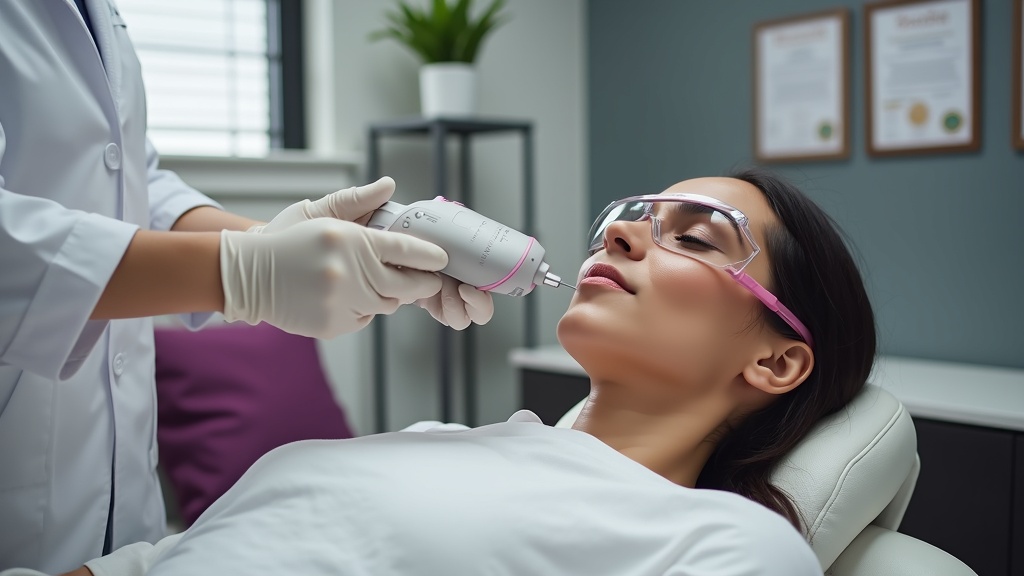
Your vascular laser visit begins with thorough skin cleansing to remove makeup, oils, and skincare products that could interfere with laser energy delivery. Depending on your pain tolerance and the treatment parameters we’re using, I may apply topical numbing cream 20-30 minutes before treatment, though many patients tolerate vascular laser with cooling alone. You’ll wear protective eyewear throughout the procedure—laser safety protocols are non-negotiable.
During treatment, you’ll feel each laser pulse—patients often describe it as a rubber band snap followed by cooling sensation. The DermaV system includes integrated cooling that protects the skin surface while allowing laser energy to reach targeted vessels. Treatment duration varies based on the size of the area being treated, typically 15-30 minutes for full-face rosacea treatment or shorter for isolated spider veins.
Your skin will be red and slightly swollen immediately after treatment, similar to a mild sunburn. Depending on the laser settings used, you may develop purpura (temporary bruising) where larger vessels were treated—this is not a complication but rather an expected response when using higher energies for stubborn vessels. The purpura typically fades within 5-10 days. Most patients apply ice packs for comfort the first day and return to normal activities immediately, with only slight pinkness easily covered by mineral makeup if desired.
Post-treatment care includes gentle cleansing, fragrance-free moisturizers, and strict sun protection for at least 2 weeks following each session. I provide specific aftercare instructions including avoiding hot showers, strenuous exercise, and alcohol for 24-48 hours—activities that increase blood flow to the face and could prolong swelling. Most patients see initial improvement 2-4 weeks after the first treatment, with optimal results emerging over 3-5 sessions spaced 4-6 weeks apart.
I customize laser settings based on your skin type, vascular lesion characteristics, and treatment tolerance—this isn’t a standardized protocol applied to every patient. Conservative initial parameters allow me to assess your skin’s response before advancing to more aggressive settings if needed. This measured approach prioritizes safety while still achieving significant results over the treatment series.
This is a medical procedure performed in a dermatology practice, not a spa treatment. The goal is therapeutic improvement in a vascular skin condition, delivered with attention to safety, evidence-based protocols, and natural-looking outcomes that enhance rather than transform your appearance.
Board-Certified Dermatologist vs. Medical Spa for Vascular Laser Treatment
| Consideration | Board-Certified Dermatologist | Medical Spa or Aesthetic Clinic |
|---|---|---|
| Provider Training | Physician with 4+ years dermatology residency plus board certification; expertise in skin pathology, vascular conditions, and laser physics | Nurse injector, esthetician, or supervised technician; training varies by state and facility |
| Diagnostic Evaluation | Comprehensive assessment to confirm rosacea vs. other causes of redness (lupus, seborrheic dermatitis, sun damage); treatment plan addresses underlying condition | Focus on cosmetic improvement of visible redness; may not evaluate underlying medical causes |
| Device Selection & Settings | Medical-grade FDA-cleared lasers with customized parameters based on skin type, Fitzpatrick classification, and vascular lesion depth | Device capabilities vary; settings may follow manufacturer protocols rather than individualized assessment |
| Complication Management | Physician on-site to manage adverse events (pigmentation changes, blistering, scarring); can prescribe medications if needed | May require referral to outside physician for complications; limited ability to prescribe treatment |
| Integration with Medical Treatment | Laser therapy coordinated with prescription medications, trigger management, and ongoing rosacea care | Typically standalone cosmetic service without medical rosacea management |
| Long-Term Relationship | Ongoing dermatology care for skin cancer screening, medical dermatology needs, and cosmetic maintenance under one roof | Relationship focused on aesthetic treatments; medical skin concerns require separate provider |
Hear From Our Community
One family recently shared their experience receiving comprehensive dermatology care at our practice:
“For my son’s first visit the office & staff were 5stars plus. Casey, the front staff was super professional & welcoming. Lisa, the MA was superb with the initial consultation getting baseline info. She addressed my son as the patient made him feel comfortable, explained each step, listened & casually involved me in the conversation to cover all the reasons for our visit. Dr Ojong was absolutely top tier, she explained my son’s condition, advised him of the options, set a plan for treatment & assured my son was committed to his treatment plan. I highly recommend Dr Ojong if you are in need of a dermatologist, I myself will now be a new patient.”
— sk
Excerpt from a publicly shared patient review. Individual experiences vary.
This reflects what I value in my practice: comprehensive patient education, clear explanations of treatment options, and collaborative decision-making that ensures patients—whether adults managing rosacea or families seeking medical dermatology care—understand their condition and feel confident in their treatment plan.
Conclusion
Vascular laser treatment offers an evidence-based approach to reducing facial redness, visible vessels, and rosacea-related erythema when topical treatments alone aren’t enough. Clinical studies demonstrate significant improvement in telangiectasia and diffuse erythema, though the quality of evidence varies and results depend heavily on proper device selection, customized treatment parameters, and physician expertise in managing different skin types and vascular patterns.
This is medical dermatology—not just cosmetic enhancement—and comprehensive care means addressing both the visible vascular symptoms and the underlying chronic condition. At Rêve Dermatology, I combine board certification in dermatology and Mohs surgery with advanced vascular laser technology to create treatment plans tailored to your individual redness pattern, skin type, and aesthetic goals.
If you’re experiencing persistent facial redness, visible spider veins, or rosacea symptoms that affect your quality of life, I invite you to explore whether vascular laser therapy is appropriate for your specific concerns. We serve patients throughout The Woodlands, Spring, Conroe, and surrounding North Houston communities who seek physician-led dermatology care that integrates medical expertise with advanced cosmetic technology.
Ready to Address Your Facial Redness?
Schedule a consultation with Dr. Oben to discuss vascular laser treatment options and develop a comprehensive plan for managing persistent redness and visible vessels.
This article is for educational purposes only and does not replace professional medical advice, diagnosis, or treatment. Vascular laser treatment is used at Rêve Dermatology & Aesthetics as part of comprehensive dermatologic care for rosacea and vascular conditions. Results vary based on individual factors including skin type, rosacea severity, and treatment history. The research cited reflects specific study populations and controlled settings; your results may differ. Always consult with a qualified dermatologist before starting any new treatment.
Board-Certified Dermatologist & Board-Certified Mohs Surgeon · Rêve Dermatology & Aesthetics, The Woodlands